
1740 products
1740 products
Sort by:
Products
***Arriving May 17th***
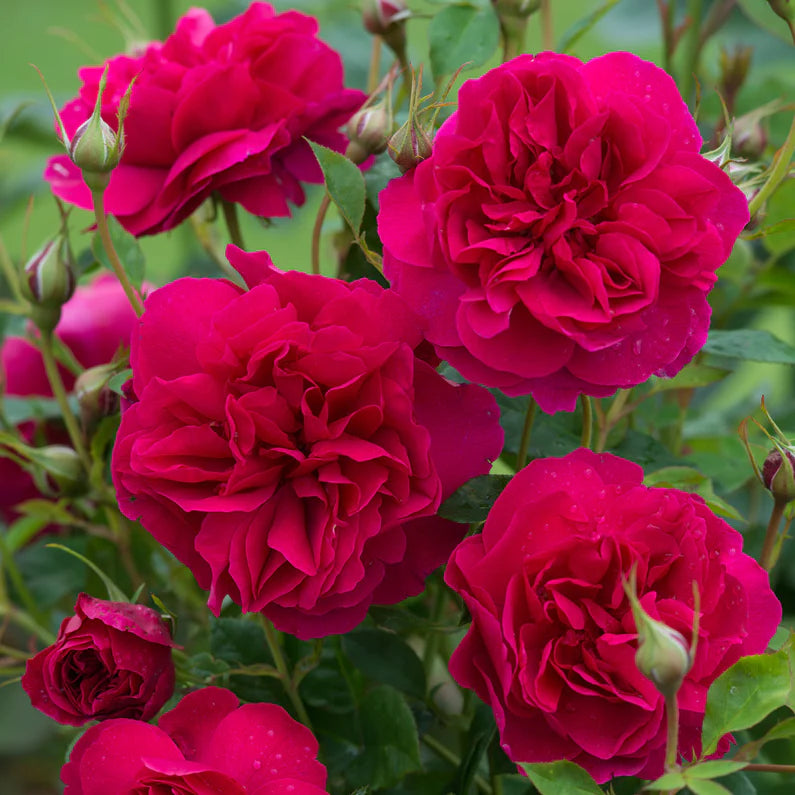
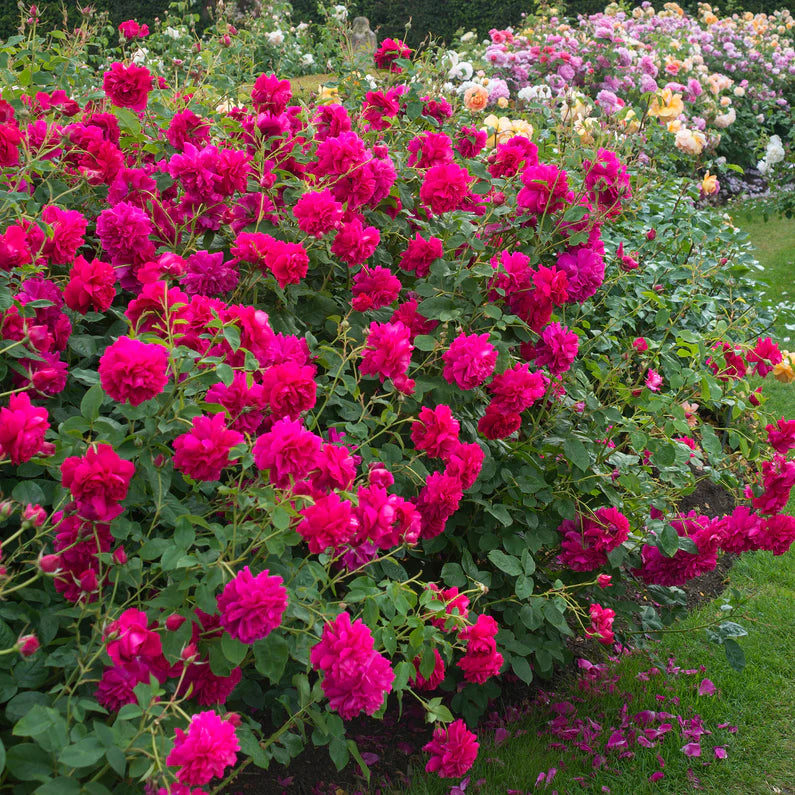
This is a variety of very different character from the general run of English Roses, being rather closer to the Species Roses than to the Old Roses and more natural and shrubby in growth. A striking crimson-red; the individual flowers can best be described as shallowly cupped, opening as informal rosettes; the petals quickly reflexing as the flowers age. They are held in medium-sized heads; the individual blooms nodding attractively on the stem. They have an Old Rose fragrance with a strong lemon zest character. It forms a strong, rather informal shrub. Named for Canterbury Cathedral.
David Austin Roses were not developed for Zone 3. BUT it is possible to have success here in Manitoba by following a few key tips.
Choose a location that is not in line with strong north winds
Plant the crown (this is where the roots end and the woody shrub begins) of your rose 6”-12” below the surface of the soil. As your shrub will be in full leaf at time of purchase you can clean off leaves that will get buried if you like.
In the fall you will need to cover with a deep layer of mulch. Wood mulch, straw, leaves or a combination of all. Use a burlap tarp (Not Plastic) to cover and hold down with rocks or stakes. This will ensure the mulch is not blown away. A full wheelbarrow or more per rose is not out of the question. Throughout the winter direct your snow clearing efforts to cover your roses as well. The more insulation the better.
Don’t remove the tarp and mulch until night temperatures are consistently hovering about zero to +3 with no threat of deep freeze, as we sometimes see in April.
We hope you enjoy growing your David Austin Rose.
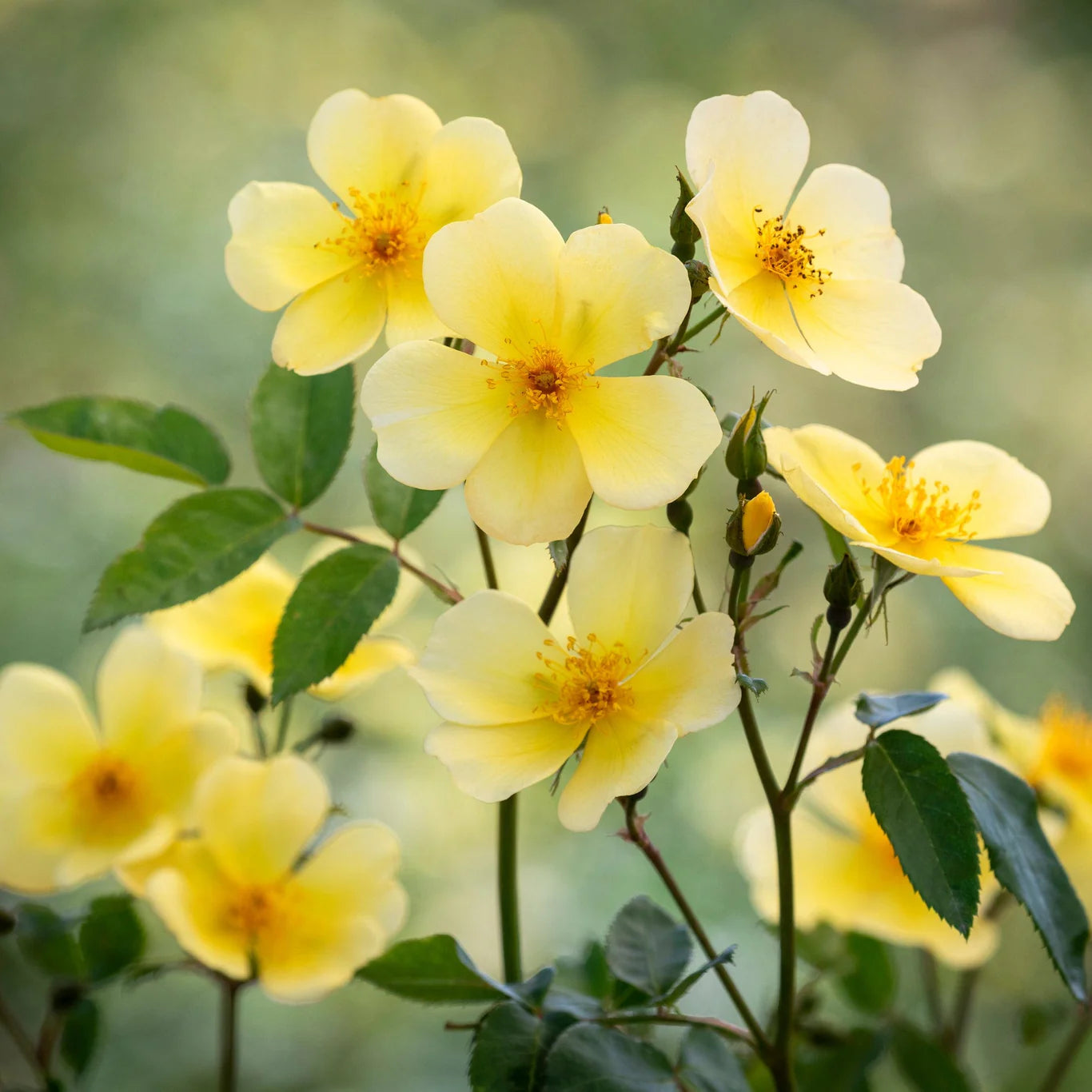
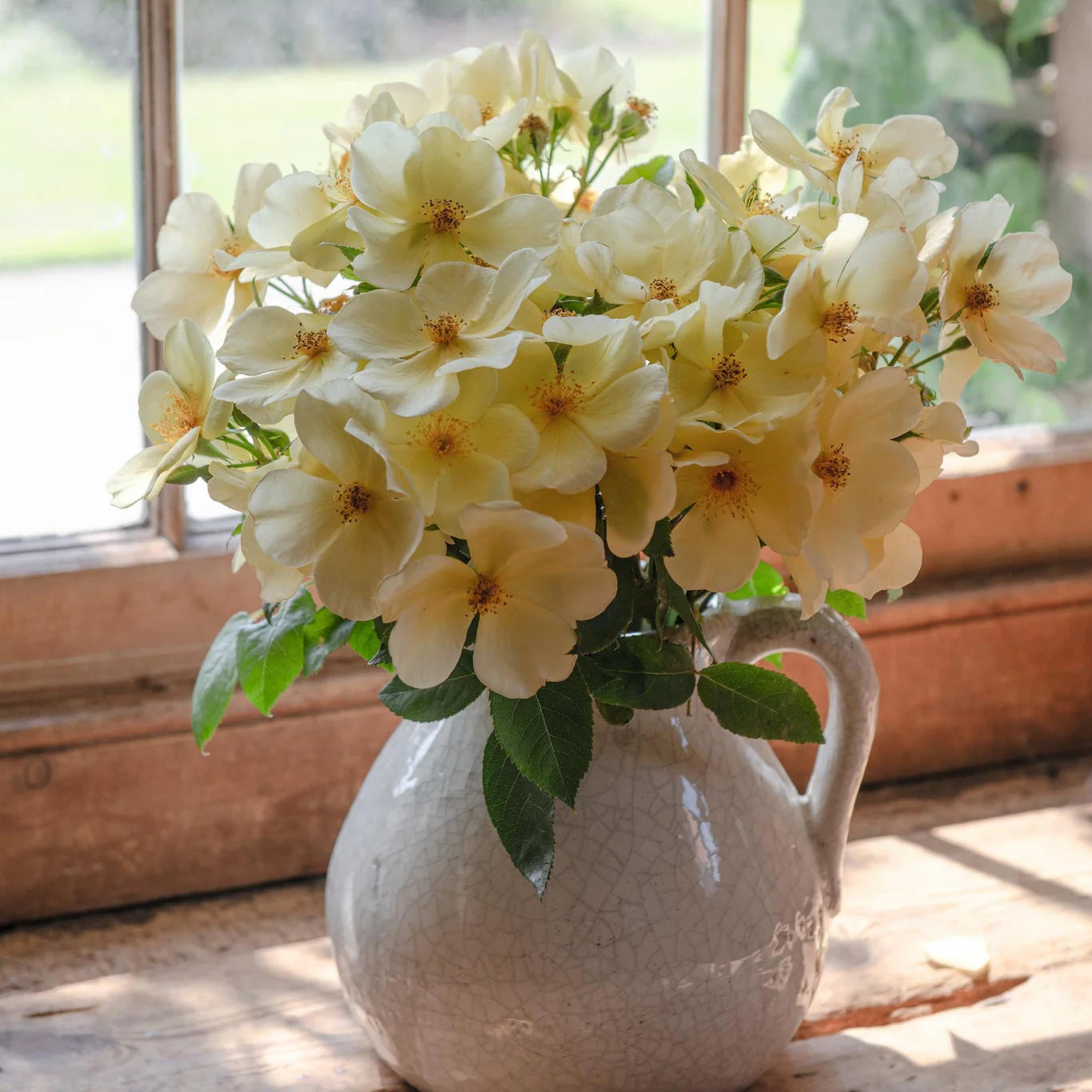
Its beauty is found in the simplicity of its single yellow flowers and the spectacular display they create when viewed en masse. They are held in large, open sprays on a rounded, branching shrub. Named to celebrate the 25th anniversary of Annie Tempest’s classic weekly cartoon.
Used for Rose Hips.
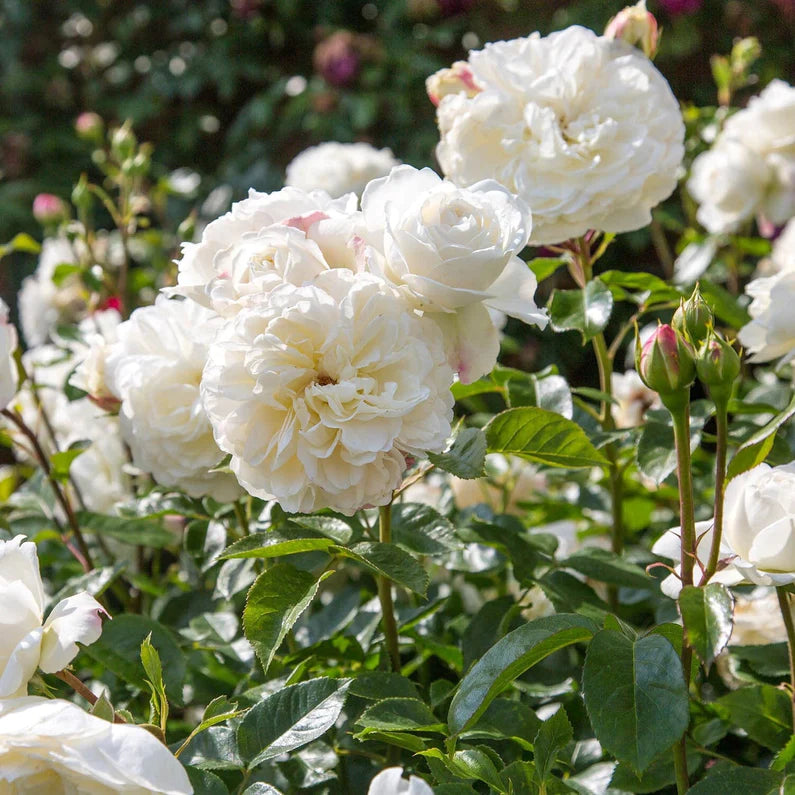
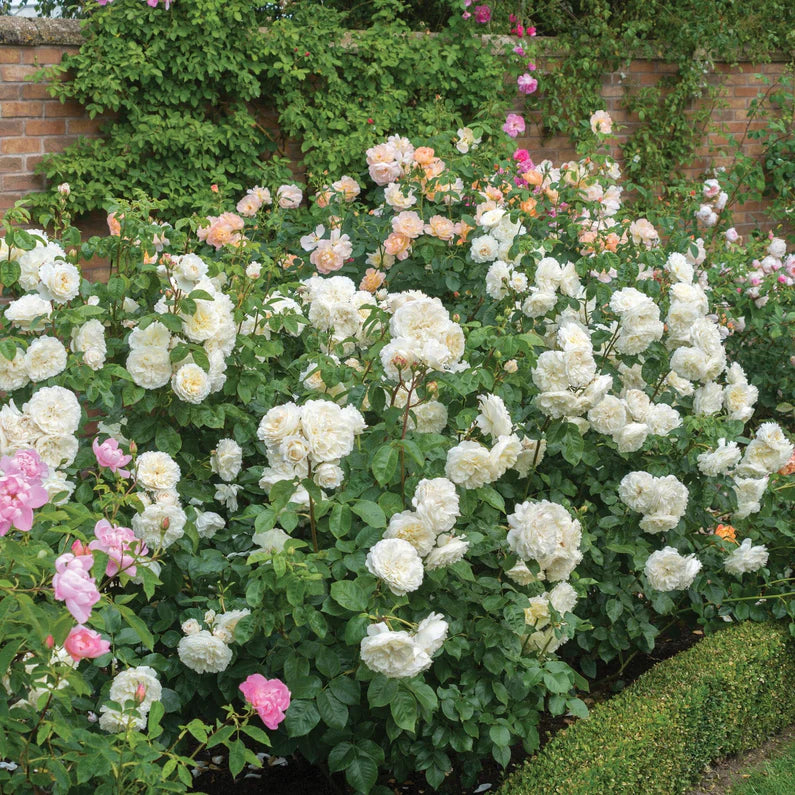
Beautifully rounded flowers, with neatly placed petals making up perfect rosettes. The buds are lightly tinged with yellow but as the flowers open they become pure white. A vigorous shrub; its growth is bushy and upright, clothed in light green foliage, curving outwards in a most attractive manner. With its pure white flowers, this rose lives up to its name.


Pink-tinged buds open to medium-sized cups held in large clusters. Pale yellow, paling to white at the edges; each has a rich yellow eye. The fragrance is similar to green tea with aspects of lemon and honey. It forms a bushy, upright shrub. Named for the artist, designer and founder member of the Bloomsbury Group – sister of the writer, Virginia Woolf.


A wonderfully fragrant climber – its strong, warm myrrh fragrance has intense hints of citrus. The buds have attractive flashes of red, open to beautifully rounded, chalice-shaped blooms of pale apricot, eventually paling to cream. Named for one of the most beautiful private gardens in the country.
David Austin Roses were not developed for Zone 3. BUT it is possible to have success here in Manitoba by following a few key tips.
Choose a location that is not in line with strong north winds
Plant the crown (this is where the roots end and the woody shrub begins) of your rose 6”-12” below the surface of the soil. As your shrub will be in full leaf at time of purchase you can clean off leaves that will get buried if you like.
In the fall you will need to cover with a deep layer of mulch. Wood mulch, straw, leaves or a combination of all. Use a burlap tarp (Not Plastic) to cover and hold down with rocks or stakes. This will ensure the mulch is not blown away. A full wheelbarrow or more per rose is not out of the question. Throughout the winter direct your snow clearing efforts to cover your roses as well. The more insulation the better.
Don’t remove the tarp and mulch until night temperatures are consistently hovering about zero to +3 with no threat of deep freeze, as we sometimes see in April.
We hope you enjoy growing your David Austin Rose.

This variety of daylily is often called 'ditch lily'. latin name is 'fulva'. blooms orange

Light Requirement: Full Sun to Part Shade
Height: 26"
Width: 28"
Zone: 2
Photo and data courtesy of Van Noort Bulb Co. & Florissa.

This spectacular spider daylily offers beautiful large blooms with a super fragrance. You’ll have great fun growing this award winning variety.
Light Requirement: Full Sun to Partial Sun
Mature Size:
- Height: 24 - 36"
- Width: 12 - 24"
Zone: 3
Photos courtesy of Van Noort Bulb Co. & Florissa.

Light Requirement: Full Sun to Partial Shade
Height: 26"
Width: 30"
Zone: 3
Photo and data courtesy of Van Noort Bulb Co. & Florissa.

Light Requirement: Full Sun to Part Shade
Height: 26"
Width: 18"
Zone: 2
Photo and data courtesy of Van Noort Bulb Co. & Florissa.

'Purple D'Oro' Daylily displays remarkable variation in colour, with lavender-purple flowers that re-bloom throughout the summer and carry into the fall with a second wave of blooms. 'Purple D'Oro' is an easy grower and low maintenance.
Light Requirement: Full Sun to Partial Sun
Mature Size:
- Height: 18-24 "
- Width: 12 - 24"
Zone: 3
Photos courtesy of Van Noort Bulb Co. & Florissa.

'Ruby Stella' Daylily shows a rich ruby coloured petal and a golden centre. Once established, this daylily is especially strong against drought and heat, and prefers drier conditions.
Light Requirement: Full Sun to Partial Sun
Mature Size:
- Height: 18-20"
- Width: 12-18"
Zone: 3
Photos courtesy of Van Noort Bulb Co. & Florissa.

Fluffy double blooms are a deep Bing cherry red color with gold wire edges. A rare color in double daylilies. Fragrant
Light Requirement: Full Sun to Partial Sun
Mature Size:
- Height: 24 - 36"
- Width: 12 - 24"
Zone: 3
Photos courtesy of Van Noort Bulb Co. & Florissa.

'Little Grapette' Daylily is a compact miniature daylily. Tidy clumps of grass-like leaves are highlighted by lavender-purple flowers on tall scapes. This smaller growing selection re-blooms throughout the summer months.
Light Requirement: Full Sun to Partial Sun
Mature Size:
- Height: 6-12"
- Width: 12"
Zone: 3
Photos courtesy of Van Noort Bulb Co. & Florissa.

The 'White Temptation' Daylily is a beautifully bright re-blooming daylily, showing a near white petal and yellow-green centre.
Light Requirement: Full Sun to Partial Sun
Mature Size:
- Height: 24 - 36"
- Width: 12 - 24"
Zone: 3
Photos courtesy of Van Noort Bulb Co. & Florissa.


Perfect for house plants!
8.5"X 0.25"X 17.7"
Deltoid Plant Stick
7"X 0.25"X 28"
Spindle Plant Stick
5.75"X 0.125"X 12"


Decorative Glass Pear, A Captivating Accent for Your Home
Elevate your home decor with this Decorative Glass Pear, a stunning piece that combines elegance and charm. Perfect for entryway table decor, this handcrafted accent adds a touch of warmth and sophistication to any space.
Materials & Composition: 90% Glass, 10% Brass
Care Instructions: Wipe Clean With Dry Cloth
Features & Benefits:
Crafted from recycled mercury glass, offering the appearance of an antique mirror
Handmade in India using traditional techniques, ensuring each piece is unique
Adds a playful touch to shelving, enhancing your home decor with a hint of whimsy
A sustainable choice for style-conscious homeowners seeking quality and craftsmanship


A blend of wildflowers that are not preferred food sources for deer or are resilient to being foraged. In times of weak grazing, deer may still nibble on these plants, but the contents of Deer Resistant wildflower seeds were chosen for their resilience to deer. Great for planting on the Gulf Islands and BC Interior, where deer can be a real nuisance. The mix will also work in any other North American setting, attracting pollinators like bees and butterflies, but foiling marauding deer. Recommended rate of application: 115g per 1,000 square feet.


Weed suppressing groundcover. Succulent green foliage. Orange, white, and pink flowers. Drought Tolerant.
Light Requirement: Full Sun
Height: 2 -4"
Width: 18"
Zone: 4

Light Requirement: Full Sun
Flowering Season: Summer
Mature Size:
-
Height: 3"
-
Spread: 18"
Zone: 4

This great series showcases some of the brightest and most exciting blossoms seen to date. Many are fringed and double and very showy. Flowers spikes are durable and require less staking.
Light Requirement: Full Sun
Height: 60"
Width: 24"
Zone: 3
Photos and information courtesy of Vanstone Nursery.


From $9.95
Unit price perFrom $9.95
Unit price perDelphiniums are the stars of the early summer border. Plants form a low mound of deeply-cut green leaves, bearing tall spikes of satiny flowers. Removing faded spikes at the base will encourage repeat blooming in fall.
Cut back hard to encourage fresh foliage. Use a high phosphorous fertilizer each year, in early spring.
Hot, humid summers can bring on potential mildew.
Light Requirement: Full Sun
Flowering Season: Summer
Mature Size:
-
Height: 12"
-
Spread: 12"
Zone: 3

Features dainty flower clusters rather than traditional long, spiky stems. Thrives in heat and humidity. Outstanding plants for the perennial border.
Light Requirement: Full Sun
Mature Size:
- Height: 12"
- Width: 12 - 16"
Image Courtesy of Ball Seed Company

This AAS award winning compact bush bean is great choice for the new gardener. The bushes are low-growing, self-supporting and shallow-rooted, making it suitable for container gardening. The plant is generally trouble-free and produces tasty 7" long, round green pods. Like other bush beans, Derby produces a one-time crop but the beans have a good holding ability so growers can enjoy an extended harvest. The above average yields are also easy to pick. Lengthen the growing season with succession planting until mid-summer. Derby is resistant to Common Bean Mosaic Virus