
79 products
79 products
Sort by:
October Sale

An exceptionally hardy evergreen shrub that has proven even hardier then the Brandon cedar. With rich dark green scale-like foliage, the 'Skybound Cedar' is the ultimate pillar in the landscape. Can be used for screening, or as a tall hedge.
Light Requirement: Full Sun to Partial Sun
Mature Size:
- Height: 10' - 18'
- Width: 3' - 4'
Zone: 2

From $129.95
Unit price perFrom $129.95
Unit price perLight Requirement: Full Sun to Partial Sun
Mature Size:
- Height: 15' - 20'
- Width: 15'
Zone: 2
Photos courtesy of Jeffries Nursery
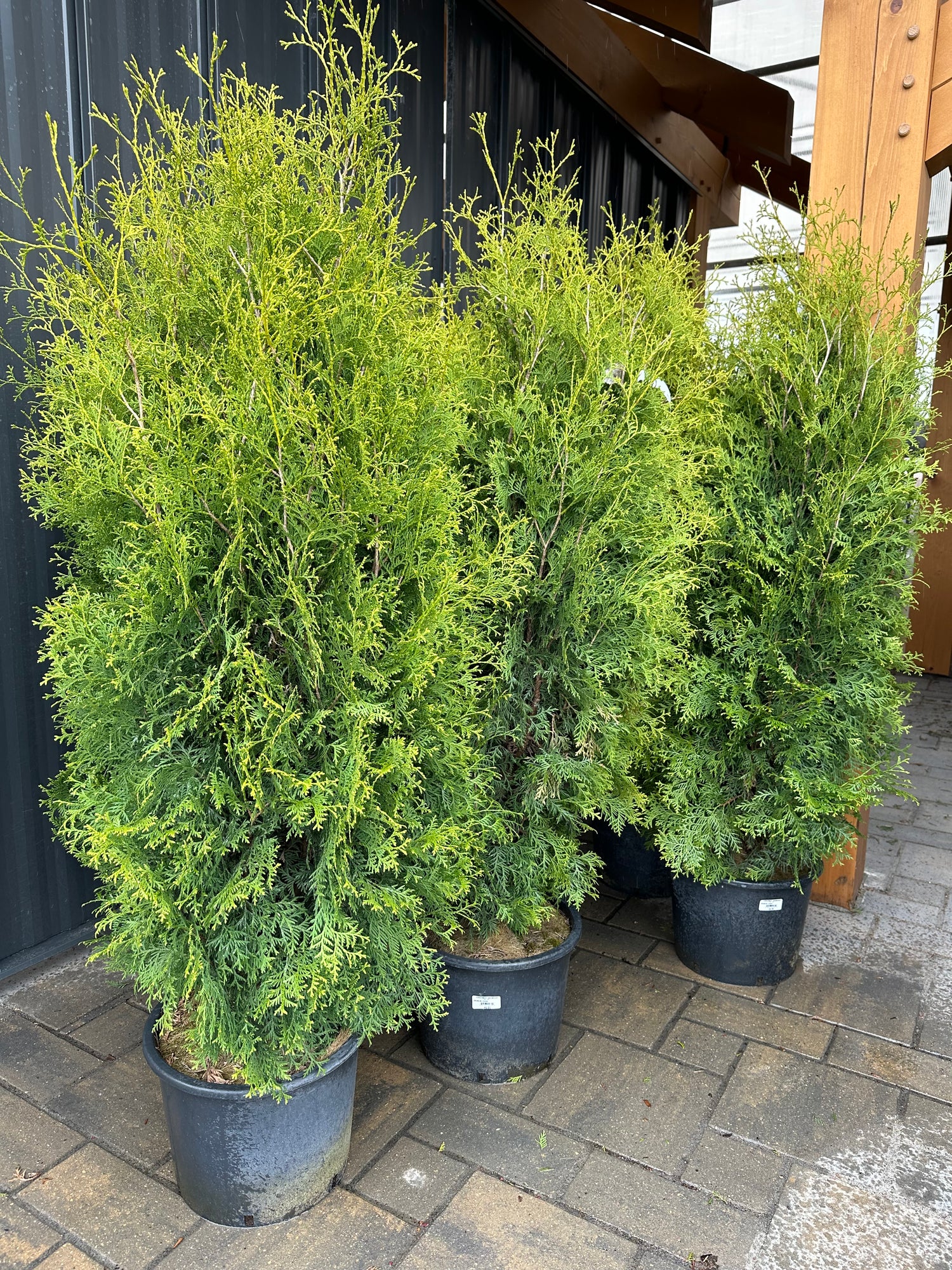

Brandon Pyramidal Cedars are deep green, and make an excellent hedge.
Winter Burlap Wrap or Wilt Pruf spay protection sealer is recommended for everygreens exposed to north winds.
Light Requirement: Full Sun
Height: 20'
Spread: 5'
Zone: 3b
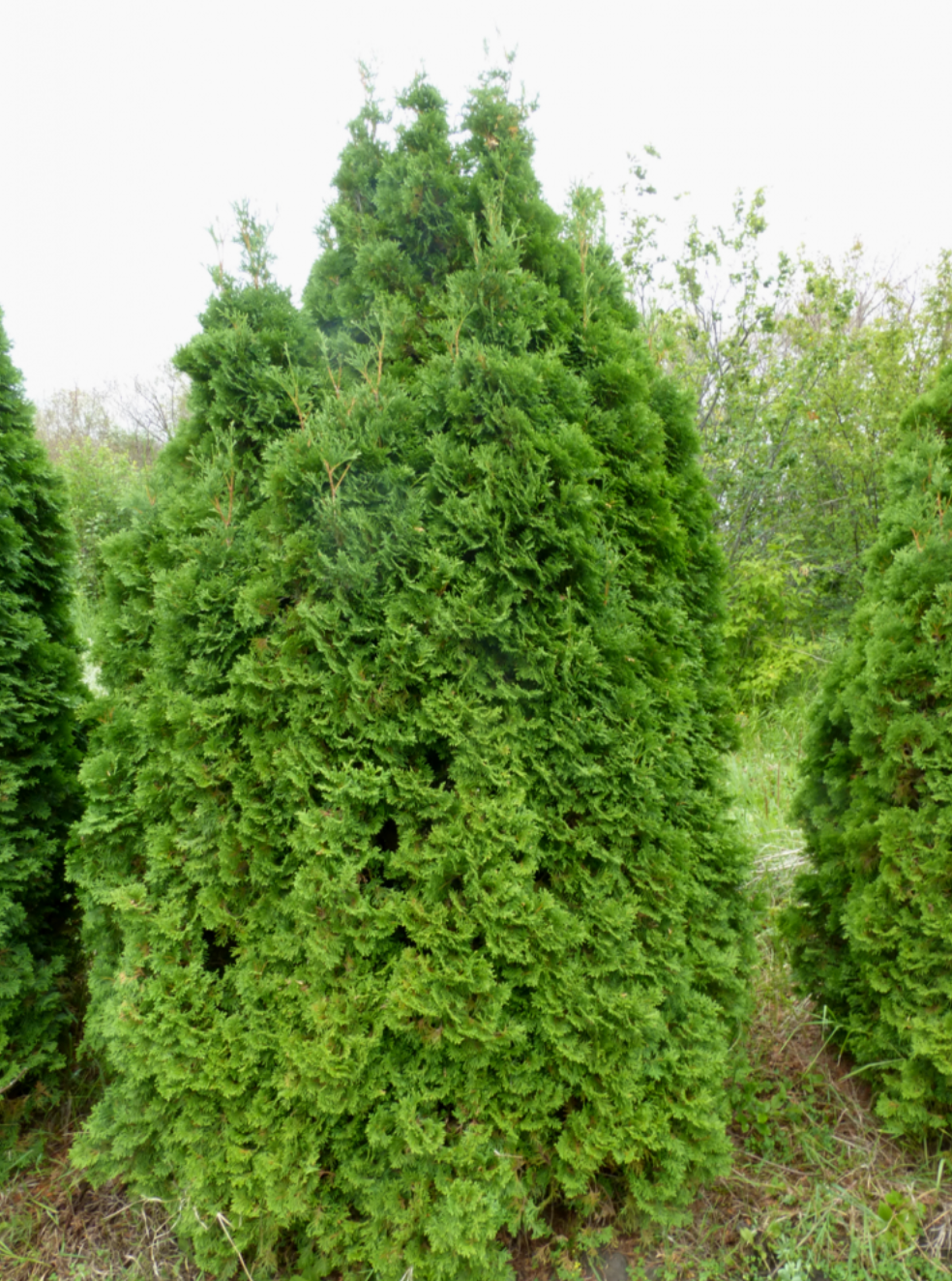
A compact, upright cedar with lush green foliage, Baby Bear maintains a consistent shape without requiring pruning. Formerly known as Skinner's Dwarf Cedar.
Light Requirement: Full Sun to Partial Shade
Mature Size:
- Height: 6' - 8'
- Width: 3' - 4'
Zone: 2
Photos courtesy of Jeffries Nursery


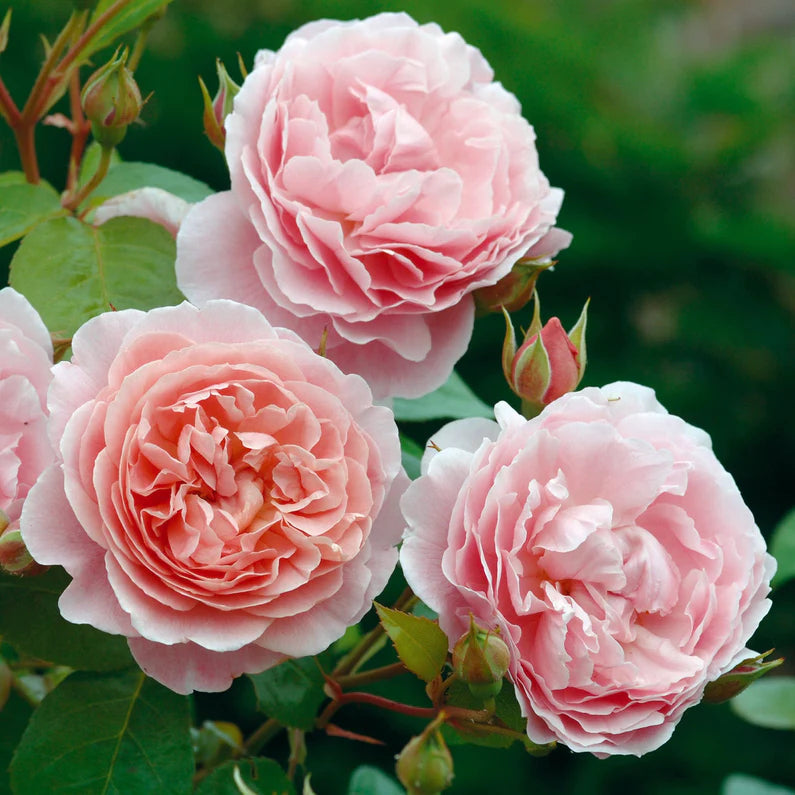
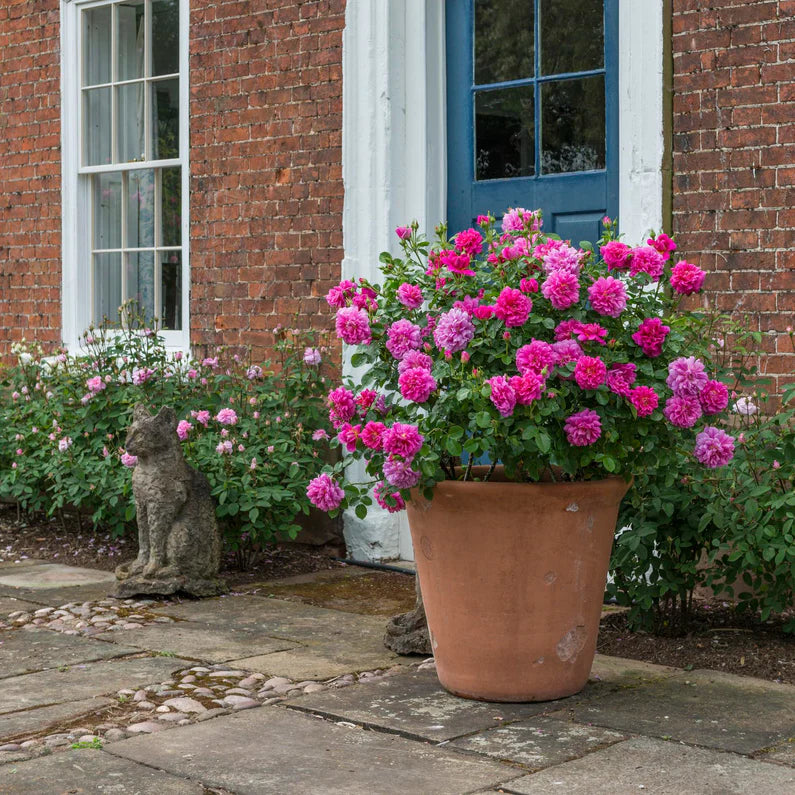
A magnificent variety, bearing medium sized, many petalled rosette blooms. They are a striking shade of deep pink, the outer petals of each bloom paling slightly over time. The beauty of the blooms is enhanced by a wonderful, strong fruity fragrance. A vigorous rose; it forms a very shapely, broad, rounded shrub with mulberry purple stems and dark green foliage, giving the overall impression of richness and abundance. Named after the beloved character in Thomas Hardy’s novel, Far from the Madding Crowd.
David Austin Roses were not developed for Zone 3. BUT it is possible to have success here in Manitoba by following a few key tips.
Choose a location that is not in line with strong north winds
Plant the crown (this is where the roots end and the woody shrub begins) of your rose 6”-12” below the surface of the soil. As your shrub will be in full leaf at time of purchase you can clean off leaves that will get buried if you like.
In the fall you will need to cover with a deep layer of mulch. Wood mulch, straw, leaves or a combination of all. Use a burlap tarp (Not Plastic) to cover and hold down with rocks or stakes. This will ensure the mulch is not blown away. A full wheelbarrow or more per rose is not out of the question. Throughout the winter direct your snow clearing efforts to cover your roses as well. The more insulation the better.
Don’t remove the tarp and mulch until night temperatures are consistently hovering about zero to +3 with no threat of deep freeze, as we sometimes see in April.
We hope you enjoy growing your David Austin Rose.
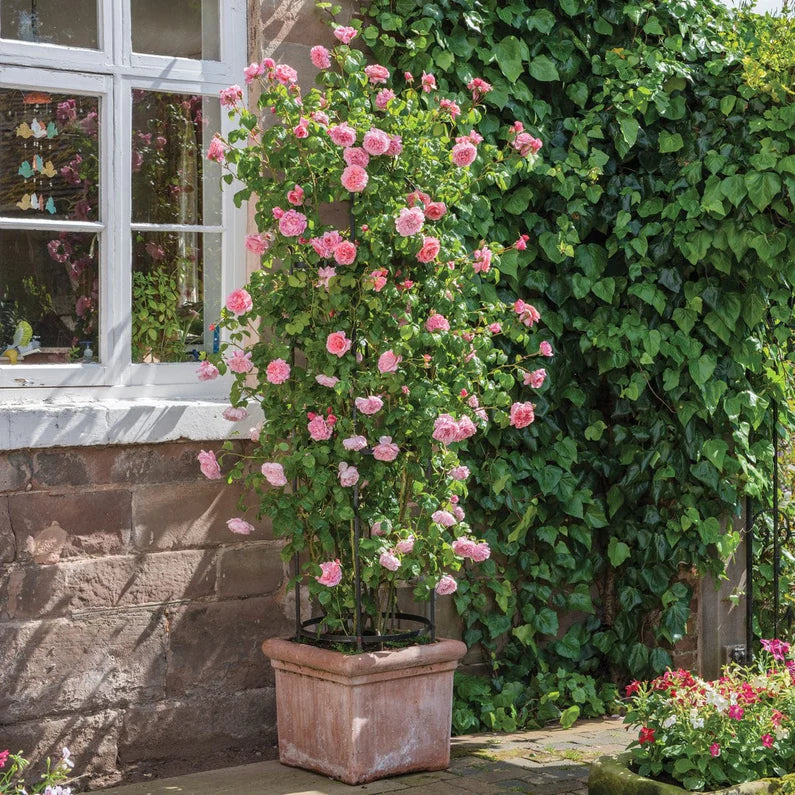
Beautiful at all stages, bearing small clusters of mid pink, medium-large, cupped rosettes. They have a strong, delicious myrrh and heather honey fragrance. The arching branches are clothed in glossy, dark foliage. Named after the gothic revival house in Twickenham, London, built by Horace Walpole.

Reminiscent Ginger rose glows with shades of orange, yellow, cream, and gold. Fragrant, cupped blooms appear across a manageable, easy-to-use habit, with new buds continuously replacing maturing flowers.
Light Requirement: Full Sun
Height: 3'
Width: 4'
Top reasons to grow Reminiscent Ginger rose:
- Warm, cheerful color
- Highly fragrant
- Compact, garden-friendly size
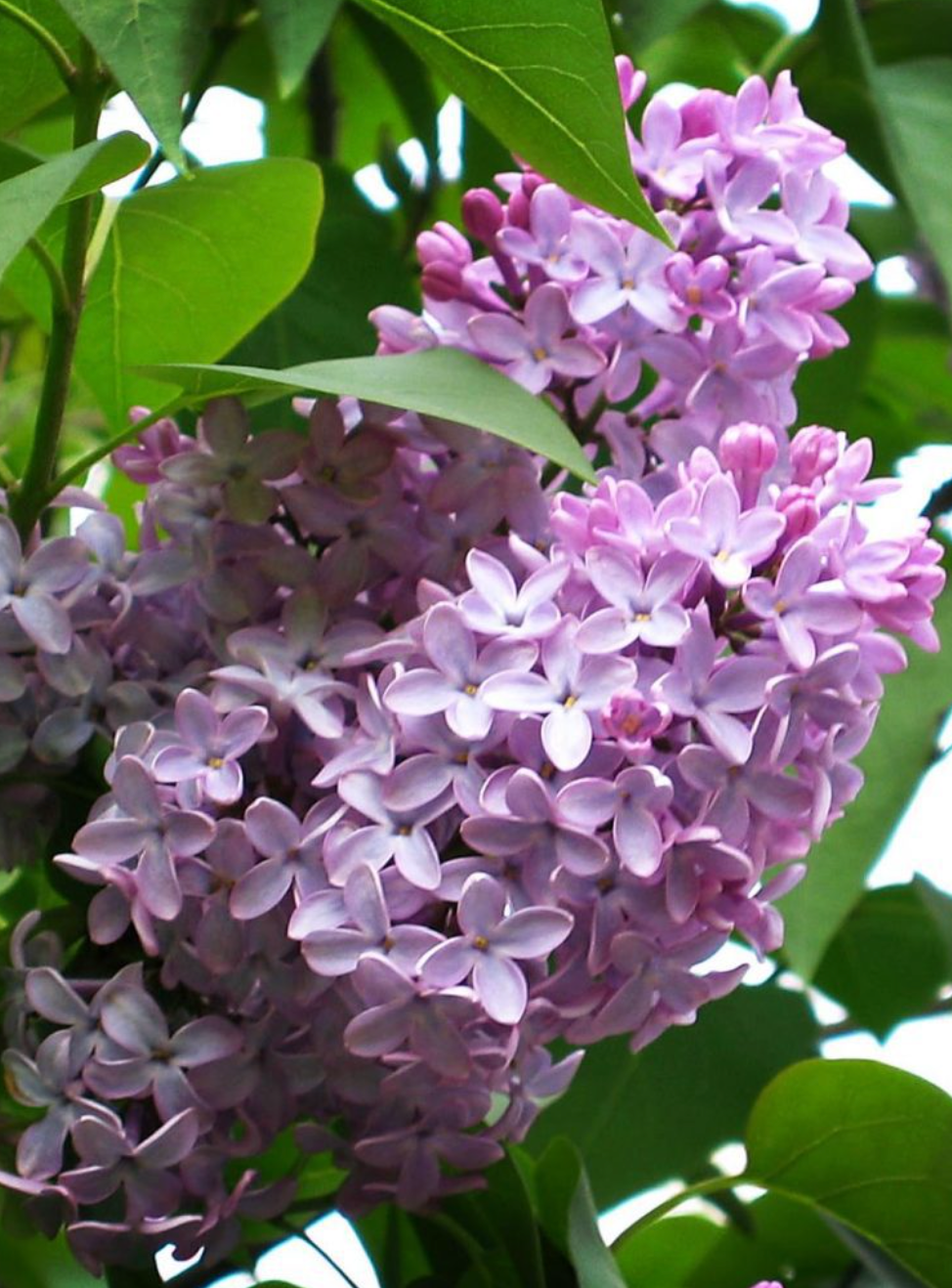
This robust shrub features attractive foliage and fragrant lilac-pink blossoms.
Light Requirement: Full Sun
Mature Size:
- Height: 12' - 15'
- Width: 8' - 12'
Zone: 2
Photos courtesy of Jeffries Nursery


Bears large, quartered rosettes, each about 4” across, packed with loosely arranged petals. They are a beautiful shade of pure apricot, paling towards the edges. There is a lovely Tea fragrance, with hints of cedar wood and vanilla. Named for Plant Heritage, who do so much to protect Britain’s garden plant diversity.


The perfectly formed, shallow cups are pure light pink, paling to soft blush on the outer petals. There is a strong, warm myrrh fragrance. It forms an attractive, quite broad shrub, with slightly arching stems. The leaves are tinged red at first, later turning green. Hermione is the faithful wife of Leontes, the King of Sicila, in Shakespeare’s The Winter’s Tale.


Selected for its resilience to harsh winter conditions, the sturdy, compact Picea glauca ‘North Star’ produces a densely branched, classic pyramid that is covered with medium green needles. Its moderate growth rate and ultimate, intermediate size, together with superior hardiness make this introduction from Iseli Nursery ideal for use in larger, more exposed spaces, mixed borders and beds.
Picea glauca ‘North Star’
- Garden Size: 12’H x 6’W
- Growth Rate: 6-10″/year
- Iseli Introduction
- Hardiness Zone: 3
- Narrow Upright
- Full Sun
- Green Needle
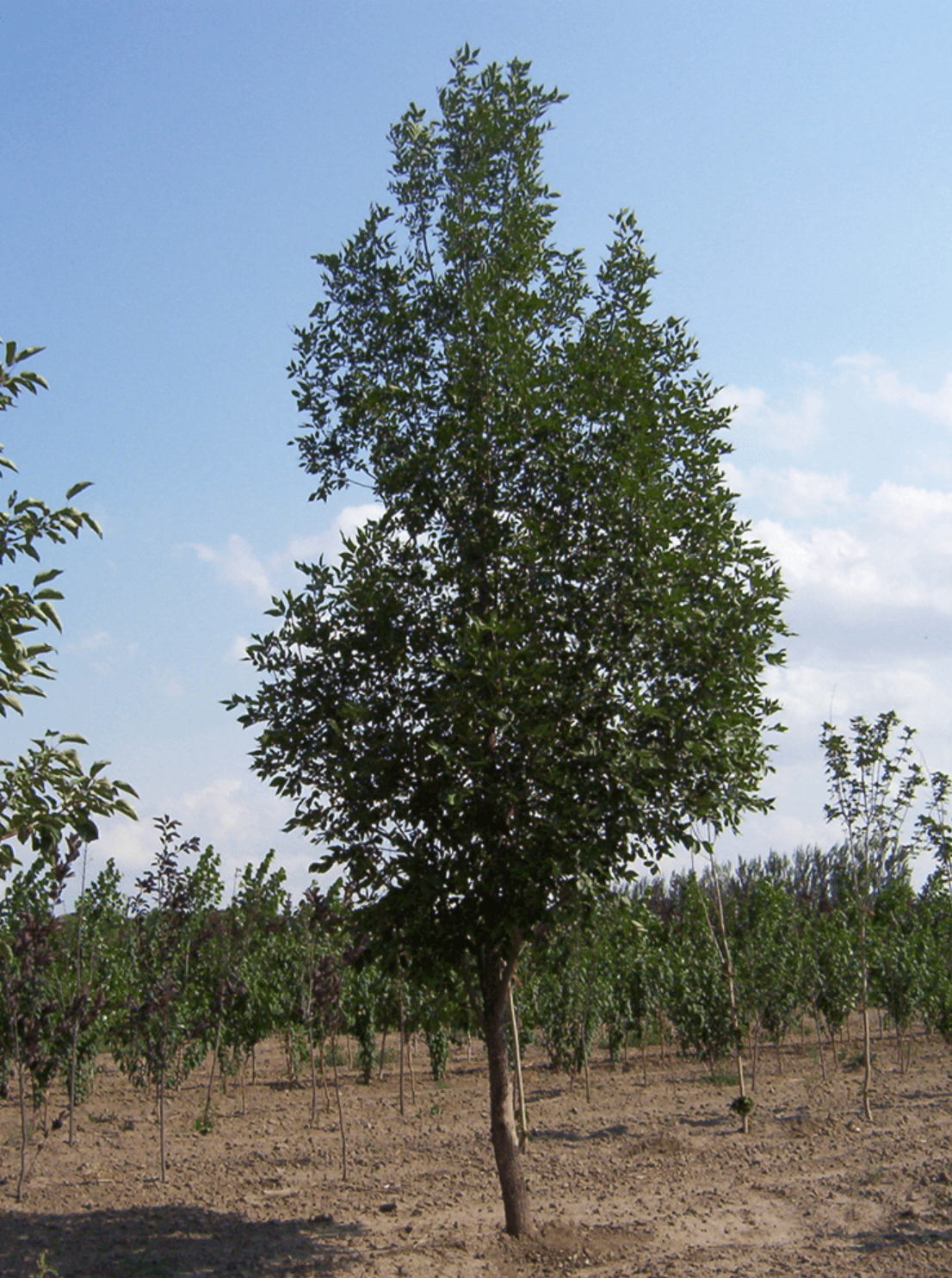
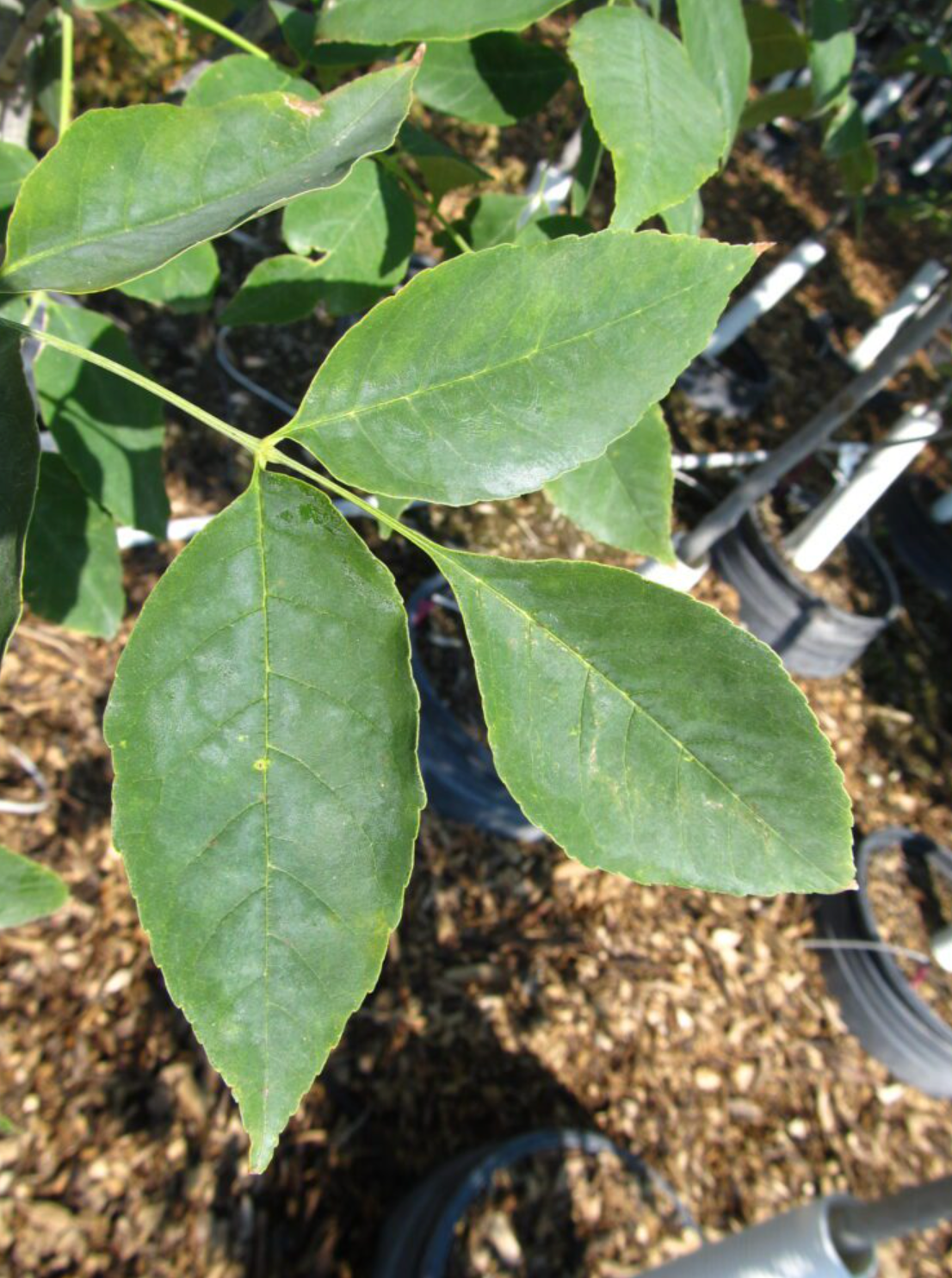
A tightly narrow shade tree, ideal for smaller properties.Prairie Spire Ash has lustrous foliage with superb gold fall colour, seedless and low maintenance.
Light Requirement: Full Sun
Mature Size:
Height: 50'
Spread: 25'
Photo and data courtesy of Jeffries Nurseries

Pendulous branches adorned with densely clustered, short needles impart an elegant, cascading charm to the surroundings. Ideal as a striking focal point or when planted collectively to form a windbreak or screen.
Light Requirement: Full Sun to Partial Shade
Mature Size:
- Height: 5' - 6'
- Width: 5'
Zone: 2


**Online orders will be charged delivery fee for 10,15 & 25gal. trees.**
A large evergreen tree with dense, ascending, lateral branches from the ground up that form a broad pyramidal to conical crown. It varies from the typical white spruce in its denser, more compact habit and slower growth rate. It has a shallow, fiberous, wide spreading root system. The thin bark is ashy gray / brown.
Brown cylindrical cones appear in late July and may persist on the tree into January. It is better adapted than the white spruce.
Grows best in acidic, moist loams with full sun, but adapts to a variety of conditions including shade, drought, hot and cold. It is flood intolerant and sensitive to soil compaction.
This tree has a slow growth rate at less than 12" per year.
Light Requirement: Full Sun
Mature Size:
- Height: 35' - 45'
- Width: 15' - 20'
Zone: 2
Photos courtesy of Jeffries Nursery
***Arriving May 17th***
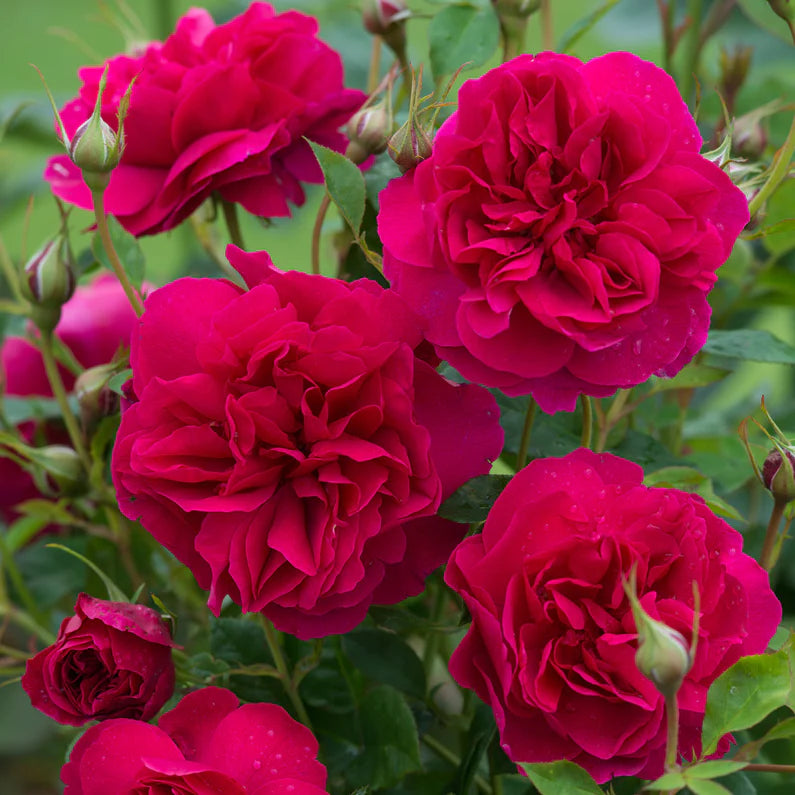
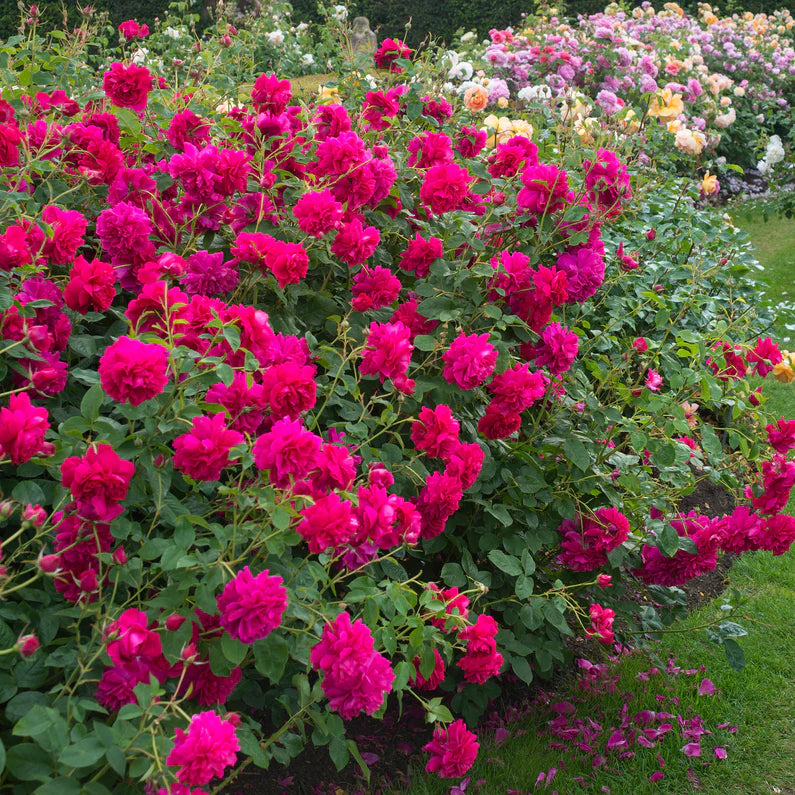
This is a variety of very different character from the general run of English Roses, being rather closer to the Species Roses than to the Old Roses and more natural and shrubby in growth. A striking crimson-red; the individual flowers can best be described as shallowly cupped, opening as informal rosettes; the petals quickly reflexing as the flowers age. They are held in medium-sized heads; the individual blooms nodding attractively on the stem. They have an Old Rose fragrance with a strong lemon zest character. It forms a strong, rather informal shrub. Named for Canterbury Cathedral.
David Austin Roses were not developed for Zone 3. BUT it is possible to have success here in Manitoba by following a few key tips.
Choose a location that is not in line with strong north winds
Plant the crown (this is where the roots end and the woody shrub begins) of your rose 6”-12” below the surface of the soil. As your shrub will be in full leaf at time of purchase you can clean off leaves that will get buried if you like.
In the fall you will need to cover with a deep layer of mulch. Wood mulch, straw, leaves or a combination of all. Use a burlap tarp (Not Plastic) to cover and hold down with rocks or stakes. This will ensure the mulch is not blown away. A full wheelbarrow or more per rose is not out of the question. Throughout the winter direct your snow clearing efforts to cover your roses as well. The more insulation the better.
Don’t remove the tarp and mulch until night temperatures are consistently hovering about zero to +3 with no threat of deep freeze, as we sometimes see in April.
We hope you enjoy growing your David Austin Rose.


A wonderfully fragrant climber – its strong, warm myrrh fragrance has intense hints of citrus. The buds have attractive flashes of red, open to beautifully rounded, chalice-shaped blooms of pale apricot, eventually paling to cream. Named for one of the most beautiful private gardens in the country.
David Austin Roses were not developed for Zone 3. BUT it is possible to have success here in Manitoba by following a few key tips.
Choose a location that is not in line with strong north winds
Plant the crown (this is where the roots end and the woody shrub begins) of your rose 6”-12” below the surface of the soil. As your shrub will be in full leaf at time of purchase you can clean off leaves that will get buried if you like.
In the fall you will need to cover with a deep layer of mulch. Wood mulch, straw, leaves or a combination of all. Use a burlap tarp (Not Plastic) to cover and hold down with rocks or stakes. This will ensure the mulch is not blown away. A full wheelbarrow or more per rose is not out of the question. Throughout the winter direct your snow clearing efforts to cover your roses as well. The more insulation the better.
Don’t remove the tarp and mulch until night temperatures are consistently hovering about zero to +3 with no threat of deep freeze, as we sometimes see in April.
We hope you enjoy growing your David Austin Rose.
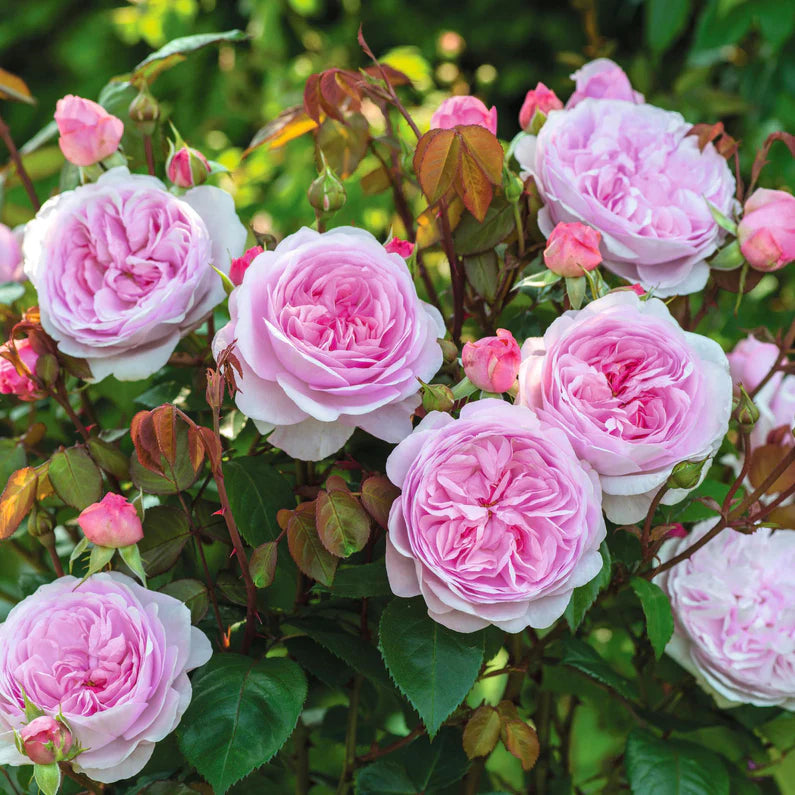
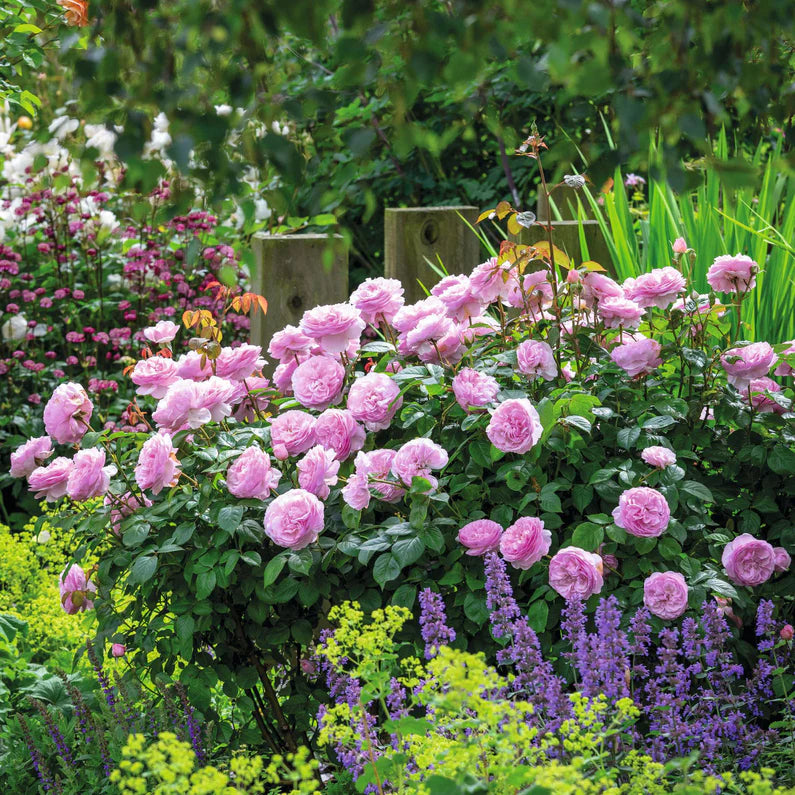
David Austin Roses were not developed for Zone 3. BUT it is possible to have success here in Manitoba by following a few key tips.
_________________________________________________________________________
You have three options, you can enjoy your David Austin Rose for a single season. You can plan to bring your potted David Austin Rose into a warmer winter environment, or you can plant it into the ground.
If you decide to enjoy your rose for the summer:
Feel free to drop your potted David Austin Rose into a decor pot of your liking, but do not pot it up into a larger size planter. You do not want to set back your rose. We use our Rose and Perennial Mix when potting up all our David Austin Roses and other than fertilizing your rose every other week they are simple to care for. In our experience you should have blooms from late June right through till fall.
If you decide to grow and over winter your rose in a pot:
First, you must be sure you have a place to overwinter your David Austin Rose and you should pot up your rose into a planter large enough for min of 2 years growth, using our rose and perennial mix.
Do not use pro mix.
A heated garage or sunroom that can be set between -2C and -5C. You will also need to keep your rose away from doors that open to -35C or colder. Your Rose needs to go dormant for a few months. Once the temp is over zero C you will see your rose begin to send out new shoots. At this point natural light is necessary and the temperature should not go below -1C at night. It is important to keep your shrub moist but not wet. Check temperature regularly. Do not bring it into the house! Roses can handle cool nights and warmer days.
If you decide to plant your rose in the ground:
Choose a location that is not in line with strong north winds
Plant the crown (this is where the roots end and the woody shrub begins) of your rose 6”-12” below the surface of the soil. As your shrub will be in full leaf at time of purchase you can clean off leaves that will get buried if you like.
In the fall you will need to cover with a deep layer of mulch. Wood mulch, straw, leaves or a combination of all. Use a burlap tarp (Not Plastic) to cover and hold down with rocks or stakes. This will ensure the mulch is not blown away. A full wheelbarrow or more per rose is not out of the question. Throughout the winter direct your snow clearing efforts to cover your roses as well. The more insulation the better.
Don’t remove the tarp and mulch until night temperatures are consistently hovering about zero to +3 with no threat of deep freeze, as we sometimes see in April.
We hope you enjoy growing your David Austin Rose.


Picea pungens ‘Montgomery’ is an outstanding and industry standard silver-blue spruce that was originally part of the conifers accumulated by dedicated collector, Col. R.H. Montgomery. Prior to selling his Greenwich, Connecticut, estate, he donated his entire collection to the New York Botanical Garden, and this Picea pungens was named to honor him during the dedication of the Montgomery Conifer Collection in May, 1949. The original plant can still be seen there today. The slow-growing, dwarf spruce is globe-shaped when young, but it will eventually form a leader as it matures and develop an upright, broad shape that is wider than tall.
Garden Size: 8’H x 6’W
Dwarf: 3-6″/year
Broad Upright
Zone 2
Blue
Conifer
Full Sun

From $259.95
Unit price perFrom $259.95
Unit price perAcer x pseudosieboldianum Ice Dragon® is a welcome addition to the Jack Frost® collection of hardy garden maples from Iseli Nursery. This all-season tree has a cascading habit and was bred and selected to tolerate Zone 4 winters while still retaining the refined qualities of the less hardy Japanese maples. Spring begins as leaves unfurl blushed orange-red, quickly maturing to green. In summer, the finely divided, delicate appearing green leaves are durable and tolerant of sun and heat. Autumn brings foliage of a kaleidoscope of yellow, orange and red. After leaf drop, the sinuous and undulating branching structure is a visual treat during the long cold winter months.
- Garden Size: 10’H x 15’W
- Growth Rate: 12-15″/year
- Hardiness Zone 4
- Cascading Habit
- Sun to Partial Shade
- Green Garden Maple
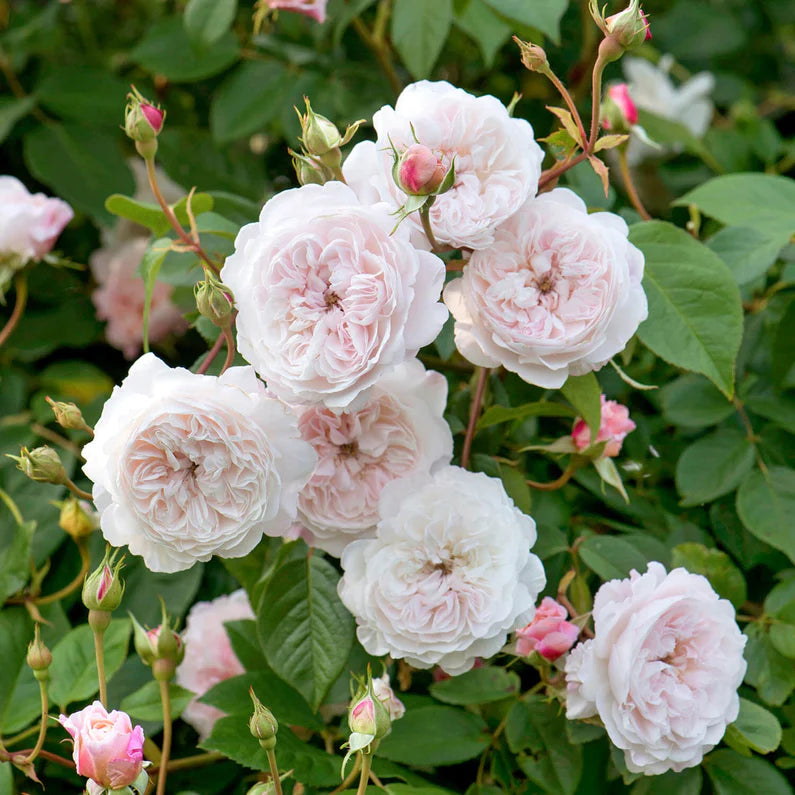
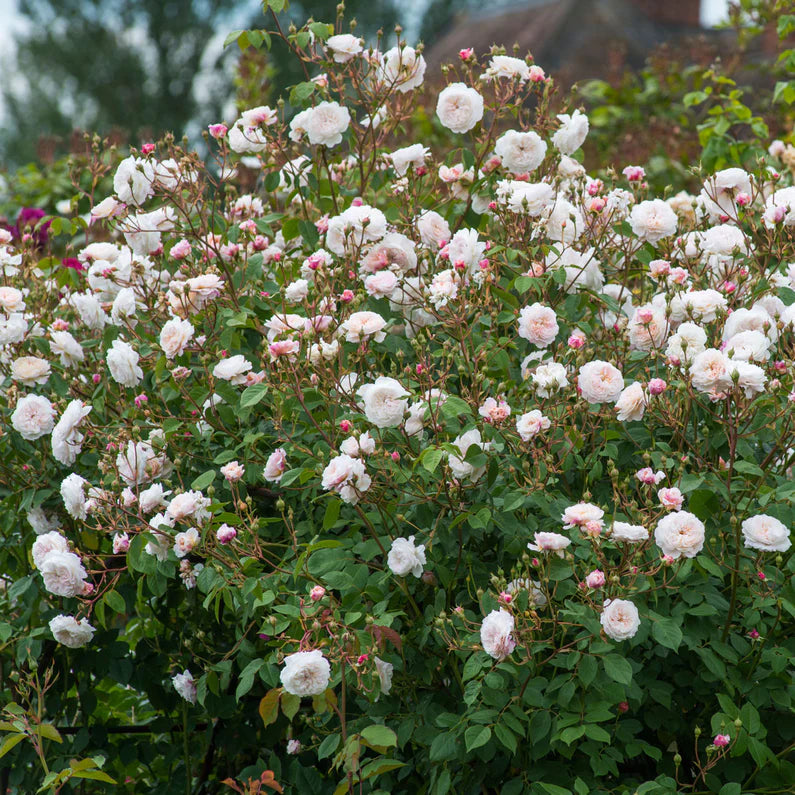
David Austin Roses were not developed for Zone 3. BUT it is possible to have success here in Manitoba by following a few key tips.
Choose a location that is not in line with strong north winds
Plant the crown (this is where the roots end and the woody shrub begins) of your rose 6”-12” below the surface of the soil. As your shrub will be in full leaf at time of purchase you can clean off leaves that will get buried if you like.
In the fall you will need to cover with a deep layer of mulch. Wood mulch, straw, leaves or a combination of all. Use a burlap tarp (Not Plastic) to cover and hold down with rocks or stakes. This will ensure the mulch is not blown away. A full wheelbarrow or more per rose is not out of the question. Throughout the winter direct your snow clearing efforts to cover your roses as well. The more insulation the better.
Don’t remove the tarp and mulch until night temperatures are consistently hovering about zero to +3 with no threat of deep freeze, as we sometimes see in April.
We hope you enjoy growing your David Austin Rose.

|
Bloom Size |
Medium |
|
Bloom Colour |
Creamy White |
|
Fragrance |
Strong Myrrh |
|
Year of Introduction |
2007 |
|
Size |
3m |
|
Family Climbing |
Root Own |
|
Flowering |
Repeat Bloomer |
|
Petal Count |
David Austin Roses were not developed for Zone 3. BUT it is possible to have success here in Manitoba by following a few key tips.
Choose a location that is not in line with strong north winds
Plant the crown (this is where the roots end and the woody shrub begins) of your rose 6”-12” below the surface of the soil. As your shrub will be in full leaf at time of purchase you can clean off leaves that will get buried if you like.
In the fall you will need to cover with a deep layer of mulch. Wood mulch, straw, leaves or a combination of all. Use a burlap tarp (Not Plastic) to cover and hold down with rocks or stakes. This will ensure the mulch is not blown away. A full wheelbarrow or more per rose is not out of the question. Throughout the winter direct your snow clearing efforts to cover your roses as well. The more insulation the better.
Don’t remove the tarp and mulch until night temperatures are consistently hovering about zero to +3 with no threat of deep freeze, as we sometimes see in April.
We hope you enjoy growing yourDavid Austin Rose.
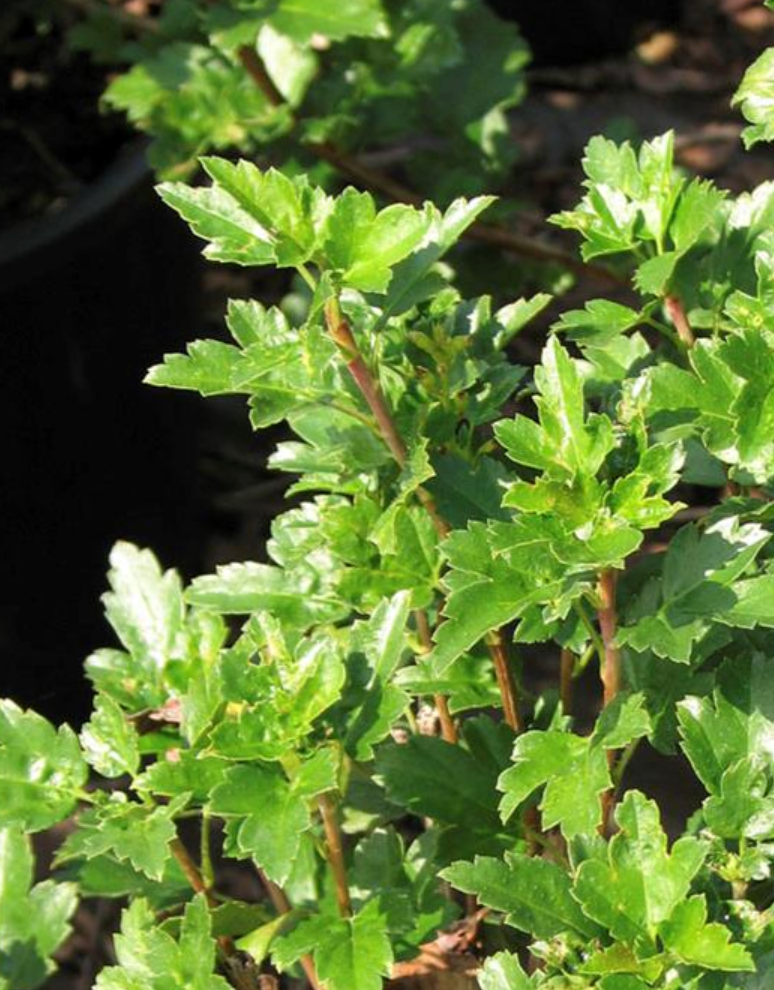
The Alpine Currant grows at a medium rate and, under ideal conditions, can be expected to live for approximately 30 years.
This shrub performs well in both full sun and full shade, and is very adaptable to both dry and moist locations. Hardy and drought tolerant, it makes an ideal choice for a moisture-conserving landscape and is highly resistant of urban pollution.
Light Requirement: Full Sun to Partial Shade
Mature Size:
- Height: 36 - 60"
- Width: 24 - 36"
Zone: 2
Photos courtesy of Jeffries Nursery

Pinus mugo ‘Mops’ is an excellent dwarf selection that grows into a low, dense dome remaining compact without shearing. The mounding plant has a smooth appearance that comes from many evenly spaced needles growing at a uniform rate on abundant branchlets. During most of the year, ‘Mops’ displays a hint of gray/blue in its green, but during the crisp, cold months of winter, needles take on a warm, golden hue. It’s no wonder this choice is one of our most popular for confined spaces.
Light Requirement: Full Sun to Partial Sun
Mature Size:
- Height: 4'
- Width: 4'
Zone: 2
Photos courtesy of Iseli Nursery
David Austin Roses were not developed for Zone 3. BUT it is possible to have success here in Manitoba by following a few key tips.
Choose a location that is not in line with strong north winds
Plant the crown (this is where the roots end and the woody shrub begins) of your rose 6”-12” below the surface of the soil. As your shrub will be in full leaf at time of purchase clean off leaves that will get buried.
In the fall you will need to cover with a deep layer of mulch. Wood mulch, straw, leaves or a combination of all. Use a burlap tarp (Not Plastic) to cover and hold down with rocks or stakes. This will ensure the mulch is not blown away. A full wheelbarrow or more per rose is not out of the question. Throughout the winter direct your snow clearing efforts to cover your roses as well. The more insulation the better.
Don’t remove the tarp and mulch until night temperatures are consistently hovering about zero to +3 with no threat of deep freeze, as we sometimes see in April.
We hope you enjoy growing your David Austin Rose.
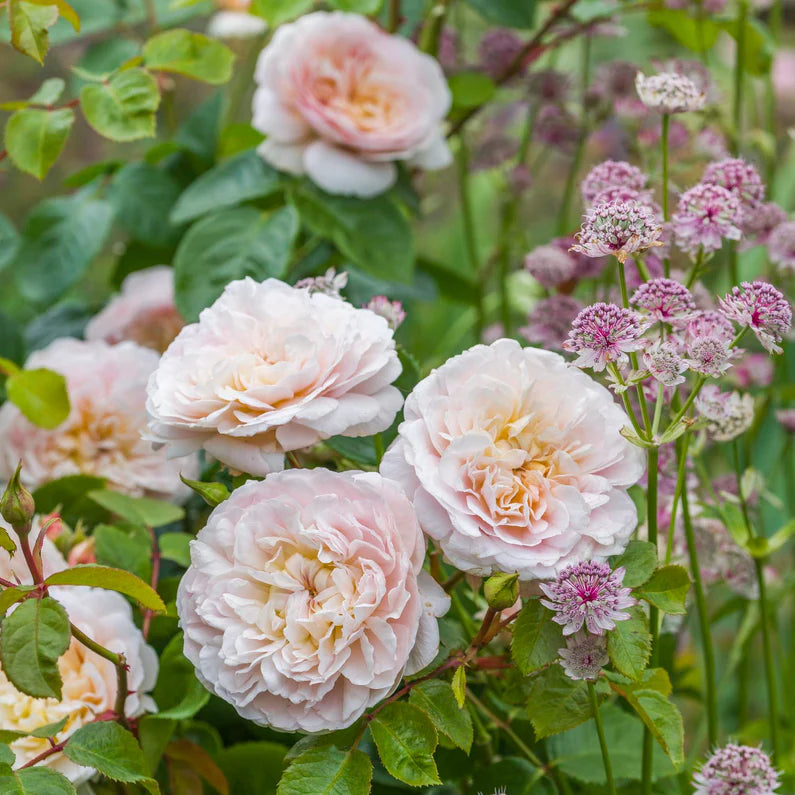
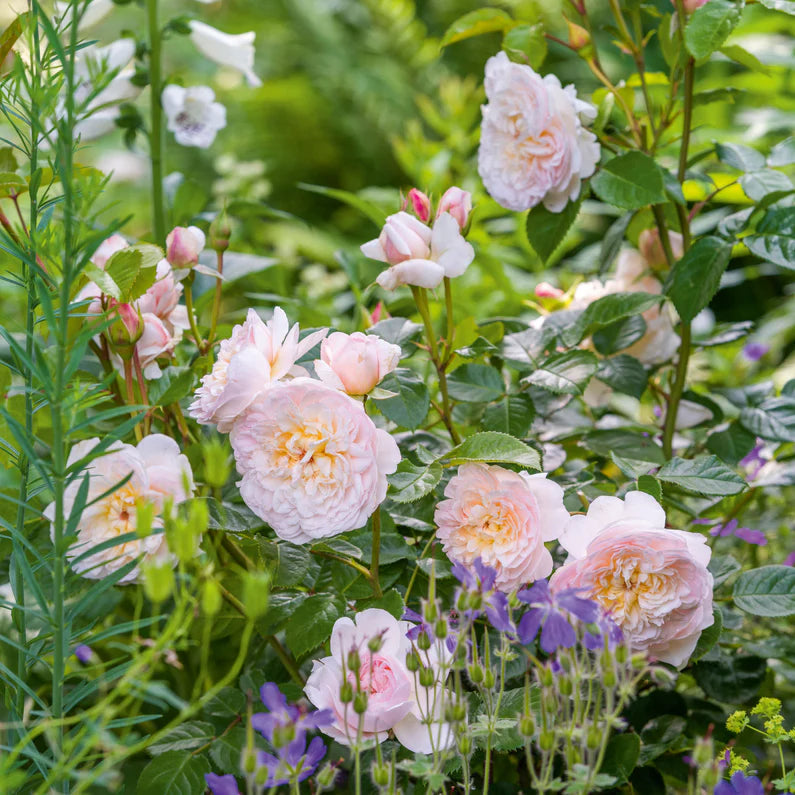
An exceptionally beautiful rose with distinctive neat, flat blooms. Each bloom is a lovely soft pink, the smaller central petals deepening to rich apricot and surrounding deep-set stamens. The strong Tea scent becomes more Old Rose, with delicious hints of lemon and grapefruit. It forms a bushy shrub with strong, healthy, upright growth. Named for the Brontë Society to celebrate the bicentenary of the novelist’s birth.
David Austin Roses were not developed for Zone 3. BUT it is possible to have success here in Manitoba by following a few key tips.
Choose a location that is not in line with strong north winds
Plant the crown (this is where the roots end and the woody shrub begins) of your rose 6”-12” below the surface of the soil. As your shrub will be in full leaf at time of purchase clean off leaves that will get buried.
In the fall you will need to cover with a deep layer of mulch. Wood mulch, straw, leaves or a combination of all. Use a burlap tarp (Not Plastic) to cover and hold down with rocks or stakes. This will ensure the mulch is not blown away. A full wheelbarrow or more per rose is not out of the question. Throughout the winter direct your snow clearing efforts to cover your roses as well. The more insulation the better.
Don’t remove the tarp and mulch until night temperatures are consistently hovering about zero to +3 with no threat of deep freeze, as we sometimes see in April.
We hope you enjoy growing your David Austin Rose.
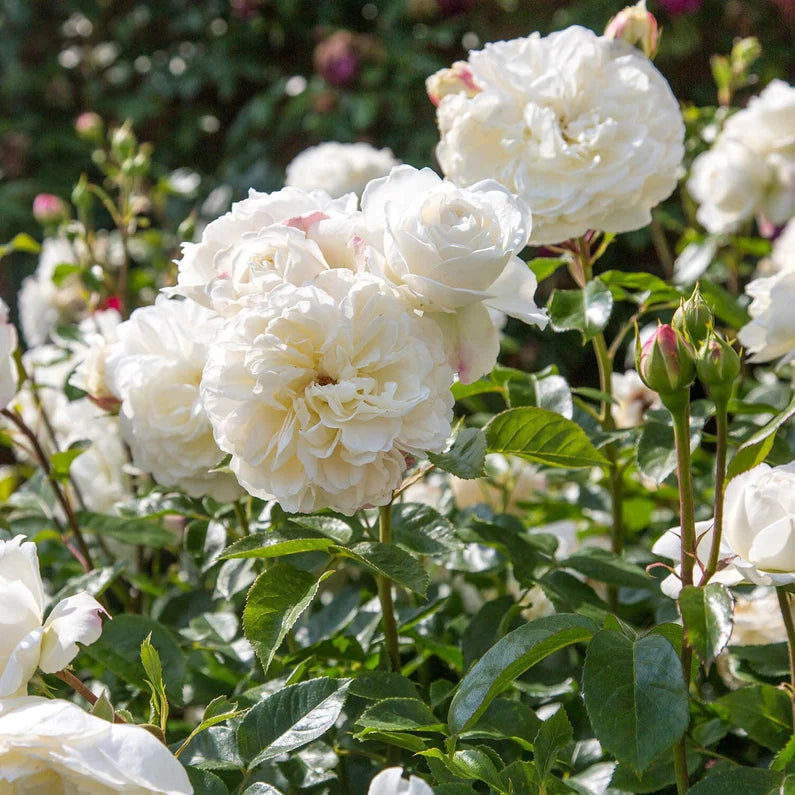
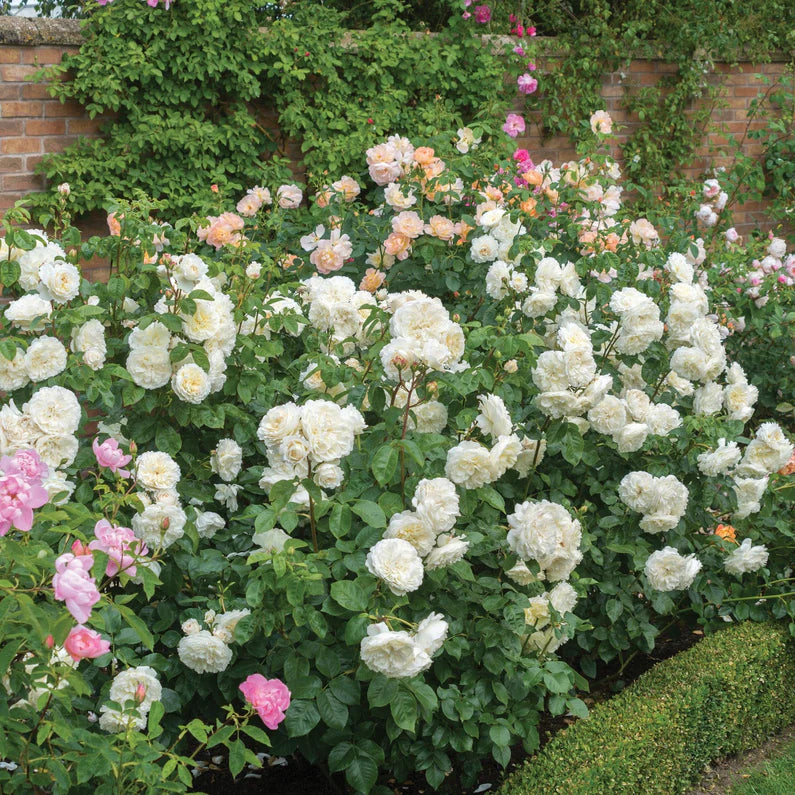
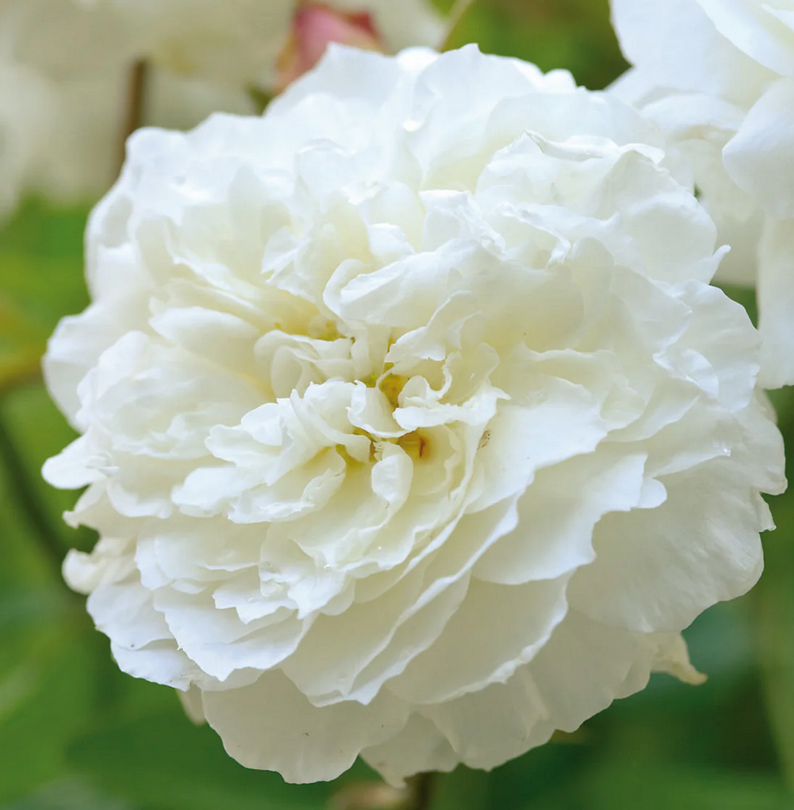
Beautifully rounded flowers, with neatly placed petals making up perfect rosettes. The buds are lightly tinged with yellow but as the flowers open they become pure white. A vigorous shrub; its growth is bushy and upright, clothed in light green foliage, curving outwards in a most attractive manner. With its pure white flowers, this rose lives up to its name.

Add a refreshing twist of lime to your summer garden with Mojito®! This compact hydrangea is covered for months in abundant lime green flowers that age to a shade of blush pink in fall. Small size and sturdy stems make this bloomer equally at home in a patio container or in a mass planting in the shrub border.
Photo courtesy of Iseli Nursery
Hydrangea paniculata Mojito®(‘GRHP10’ PPAF)
- Garden Size: 3’H x 4’W
- Deciduous
- Hardiness Zone: 4
- Wide Globe
- Sun to Part Shade
- Green Foliage