
1738 products
1738 products
Sort by:
Products


FELCO 981 VOC Free Resin Remover Spray is specially formulated for professionals and hobbyists alike. It's compatible with FELCO 980, removing resin residue from pruning tools quickly and effectively. The spray provides long-term protection against moisture and rust and is essential for keeping pruning tools in top condition.
Photos / Details provided by www.Felco.com


All tools are made from high quality boron steel and ash tree to provide you with the best quality products. The ash drop grip handle is manually oiled with ( linen based oil) to get the emblematic FELCO colour. Phthalate Free.
Hand made in Holland with a lifetime guarantee. info@felco.com


The Felco 201 loppers has a blade geometry that pulls the branch in slightly. The branch is kept close to the cutting line, to slice through it cleanly and accurately. The blade is also the result of a special production process that is exclusive to Felco. That improves the durability of the cutting edge significantly. Cutting quality has been the trademark of Felco for over 70 years, and our products are renowned for their robustness.
Cutting Diameter: 1.38 in
Length: 15.75 in
Weight: 1.54 lb

Replacement Blade for the Felco 14 pruning shears
Photos / Details provided by www.Felco.com

Photos / Details provided by www.Felco.com

2/8, 2/9, 2/16, 2/17
Photos / Details provided by www.Felco.com

2/12, 2/13, 2/14, 2/15, 2/18, 2/20
Photos / Details provided by www.Felco.com

1 F6 Blade,Spring & key
Photos / Details provided by www.Felco.com

set 2 x 6/11
Photos / Details provided by www.Felco.com
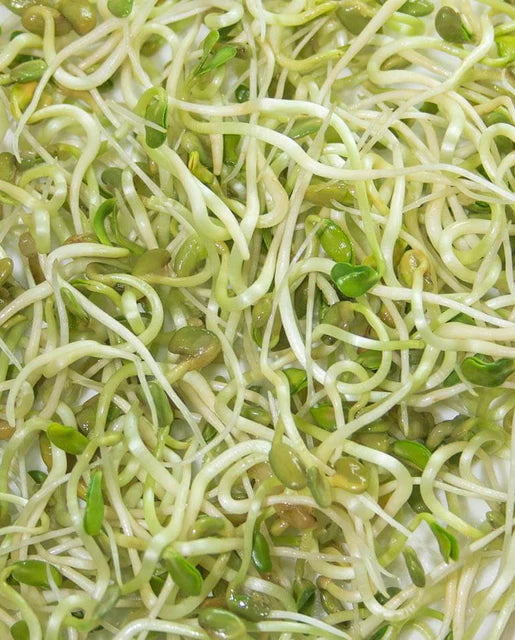
CERTIFIED ORGANIC! Fenugreek organic sprouting seeds produce large vigorous sprouts with a mild but exotic flavour. Fenugreek seeds can also be used to make a pleasant tea. Fenugreek provides a high quality protein, fibre, and wealth of vitamins including A, B1, B2, B3, B5, B6, B15, B17, C, D, E, H, folic acid, and fatty acids. Its mineral profile includes calcium, chromium, iodine, iron, magnesium, manganese, molybdenum, phosphorus, potassium, selenium, silicon, sodium, sulphur, and zinc. Fenugreek organic sprouting seeds are truly a super-food! Add to sandwiches, soups, and salads, or toss with sesame oil and enjoy them on their own.
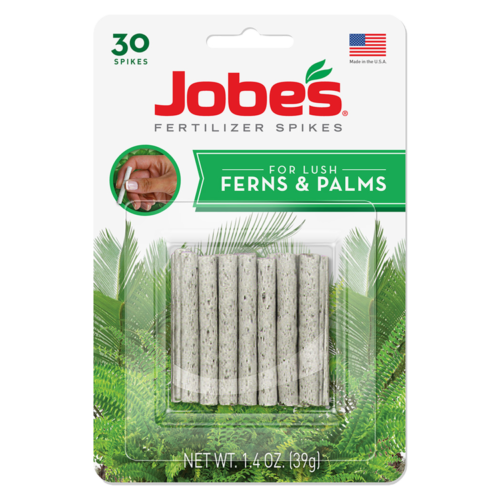
When you take advantage of Jobe’s Fern and Palm Plant Food Container Spikes, you can leave it to your leaves to flourish. Ferns and palms rely on their vibrancy to brighten up your home or landscape, which is why these specially formulated spikes supply a vital flow of nutrients at the roots – where your plants need it most. Unlike typical fertilizers, Jobe’s spikes don’t wash away when you water, eliminating hazards, smells, and overall mess. Simply insert into the soil around the plant, then apply every two months.

This majestic larger fern has long, arching fronds. The crested and forked tips of each zesty green leaflet create a unique ruffled texture. Tolerant of some sun and drought once established, this energetic fern has the potential to liven up more challenging areas in the garden.
Image courtesy of Iseli Nursery
Dryopteris affinis ‘Cristata-The King’
- Garden Size: 2-4′
- Deciduous
- Hardiness Zone: 4
- Clumping
- Green Foliage
- Shade
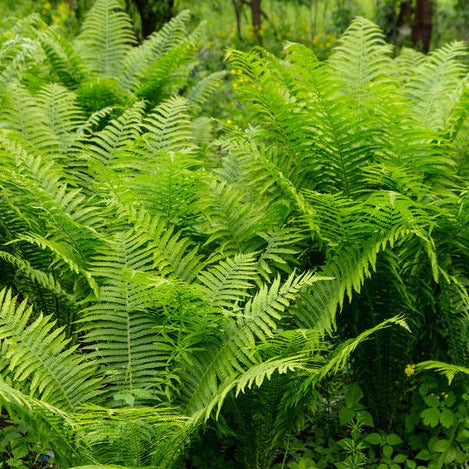
Arriving early May
One of the most common native ferns, growing all over northern regions. Plants form a large, upright clump of big green fronds. In spring the unfurling fiddleheads are often harvested in the wild as a gourmet treat. Roots are spreading, and plants can form quite a large patch in time. Requires plenty of water through the summer, otherwise the foliage may become dormant. Cinnamon-brown fertile fronds push up from the centre of each clump in summer, and these remain attractive all winter long. Prune off dead foliage and fertile fronds in late winter. Deciduous.
Light Requirement: Full Sun to Partial Sun
Mature Size:
- Height: 16"
- Width: 18"
Zone: 2


Light Requirement: Full Sun to Partial Shade
Mature Size:
-
Height: 2.5'
-
Width: 1.5'
Zone: 3a
Photo coming soon.

'Blue Fescue' ornamental grass has slender, wiry blades of blue. It is a tidy evergreen that is very tolerant of a wide range of sites and conditions. This grass is perfect for a brightly coloured, mounding accent plant for borders, rockeries or even containers.
Low maintenance, plant in a sunny location with well drained soil.
Light Requirement: Full to Part Sun
Mature Size:
-
Height: 24"
-
Spread: 24"
Zone: 4

Ficus Burgundy, a cultivar of the Ficus elastica, is a striking indoor plant with large, glossy, burgundy-colored leaves, creating a dramatic and sophisticated aesthetic.
Light Requirement: Thriving in bright, indirect light, place the Ficus Burgundy in a location with filtered sunlight or partial shade. It can tolerate lower light conditions but benefits from exposure to moderate to bright light for optimal leaf coloration.
Watering Requirement: Allow the soil to partially dry between waterings, and water thoroughly. Ficus Burgundy prefers slightly moist but well-draining soil. Be cautious not to overwater to prevent root issues.
Mature Height: With a tree-like growth habit, the Ficus Burgundy can reach varying heights, commonly growing up to 6 to 10 feet (180 to 300 cm) indoors. Regular pruning can help maintain a compact and bushy shape.
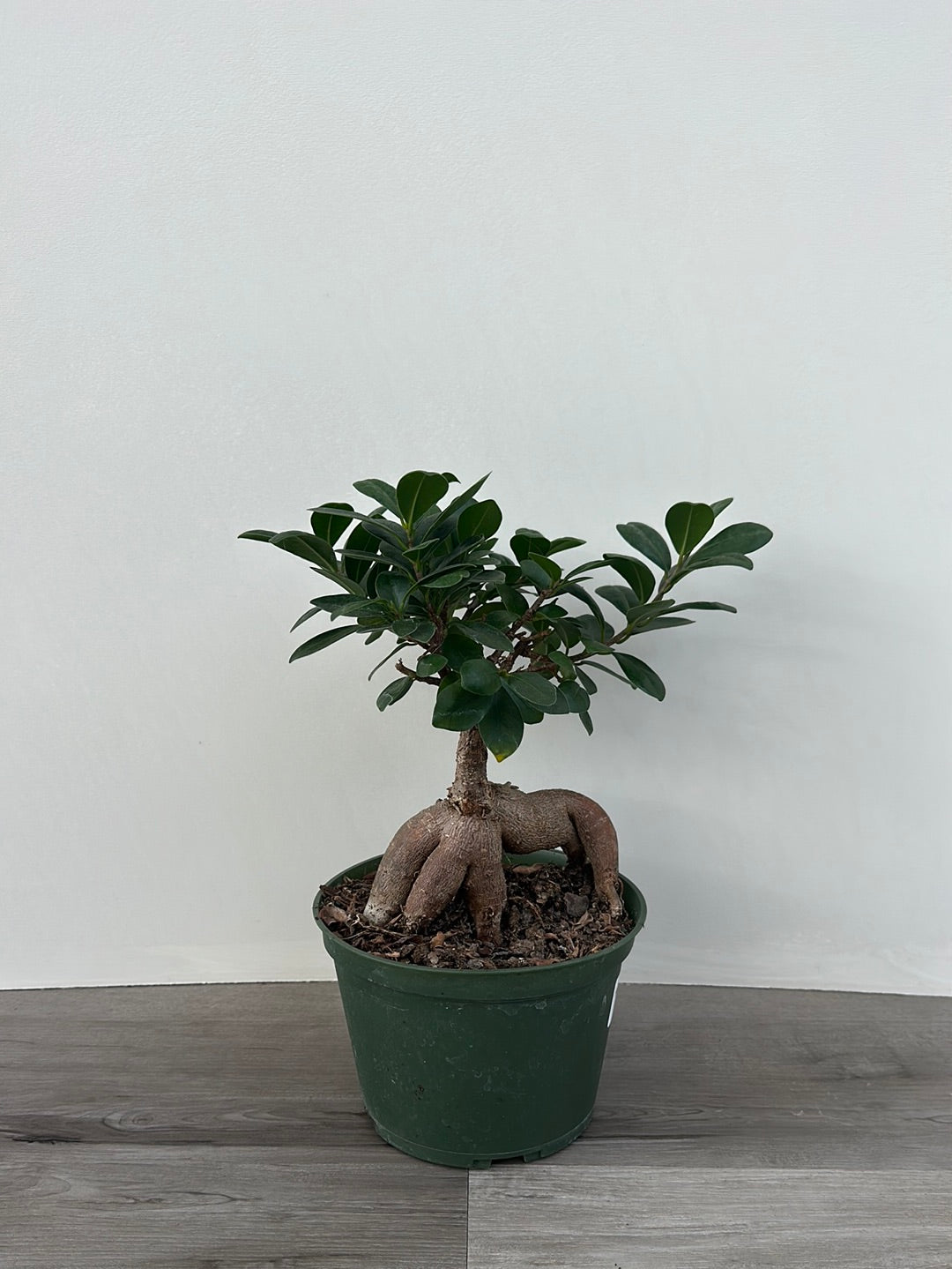
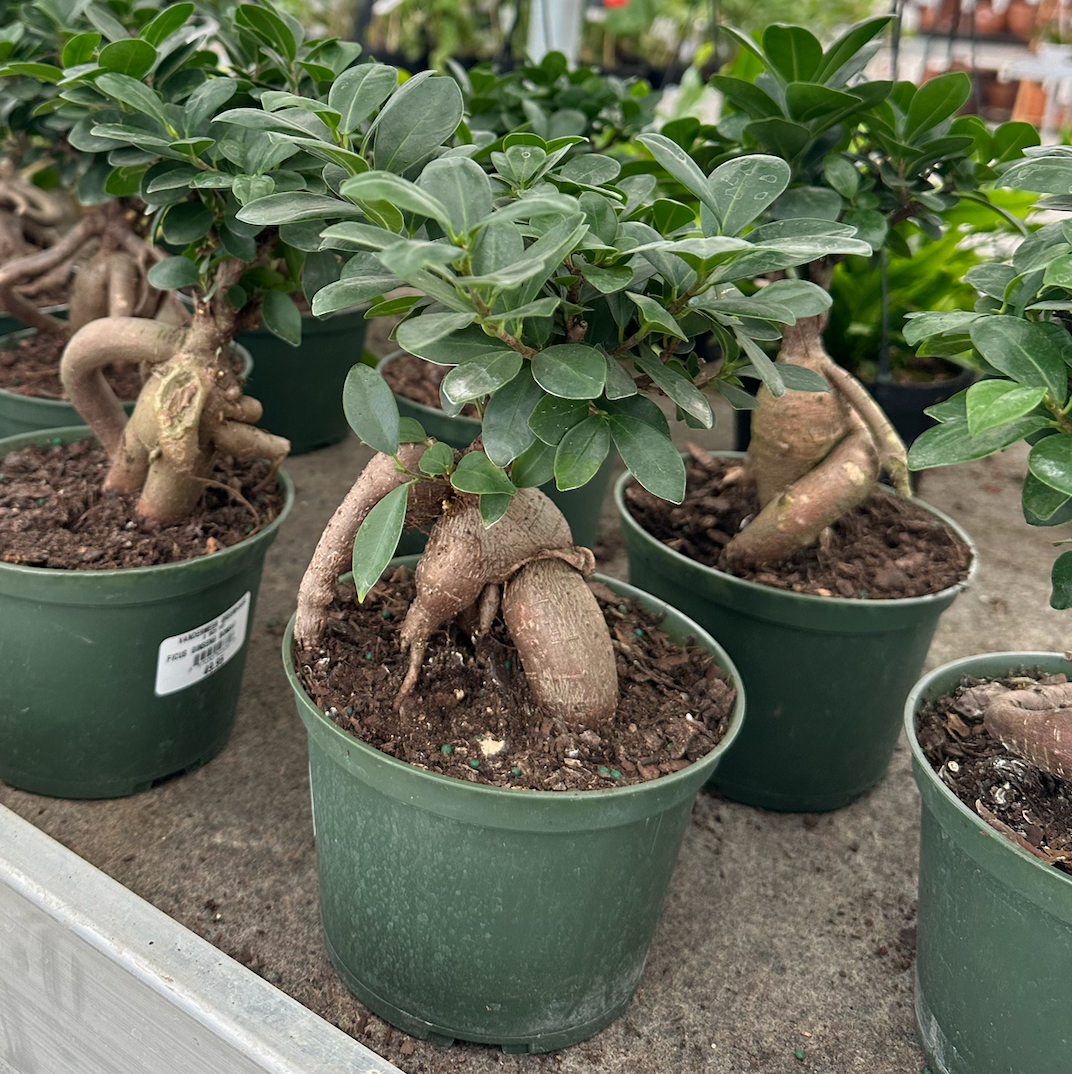
The Ficus Ginseng Bonsai is a distinctive bonsai variety featuring a thick, twisted trunk with shiny, oval-shaped, and vibrant green leaves, creating an artistic and captivating appearance.
Light Requirement: Preferring bright, indirect light, place the Ficus Ginseng Bonsai in a location with filtered sunlight. It can tolerate lower light conditions but benefits from exposure to moderate to bright light for optimal growth.
Watering Requirement: Allow the soil to partially dry between waterings, and water thoroughly. Ficus Ginseng Bonsai prefers slightly moist but well-draining soil. Avoid overwatering to prevent root rot.
Mature Height: Maintaining a compact size, the Ficus Ginseng Bonsai is ideally suited for bonsai cultivation and can reach a height of 8 to 12 inches (20 to 30 cm) with regular pruning to maintain its intricate form.


10" pot

10" pot

Ficus Lyrata
Native to tropical western Africa, Ficus lyrata, commonly known as the fiddle-leaf fig, has very large green leaves with a leather-like texture. Although Ficus lyrata grows naturally in lowland tropical forests it can thrive in a large range of environments. Place in bright indirect sunlight, on the ground where it can grow up to 6' tall. Keep soil moist.
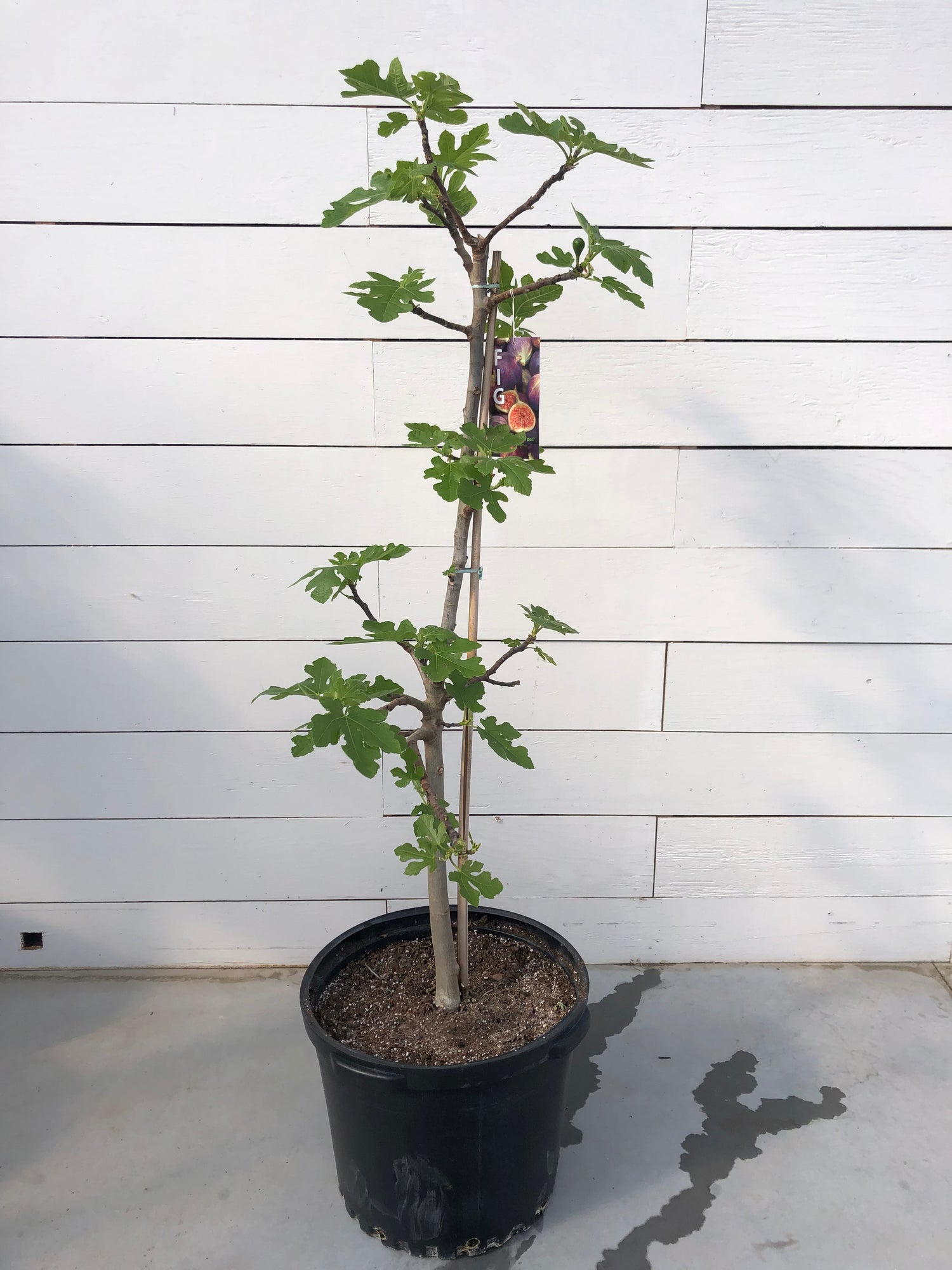
**Online orders will be charged delivery fee for 10,15 & 25gal. trees.**
Fig trees like to receive a min of 6 hours of indirect/direct light every day. Placing the tree in a south facing window or conservatory is ideal. The more light your fig tree receives the more fruit it will produce.
15 Gal. Pot 5-7' tall from ground.


Just put in water and tea leaves. Let it sit overnight, and delicious tea is ready the next morning.
As a filter is incorporated into the spout, you can pour the tea as it is. Washing is easy, too.
This wine-bottle-shaped bottle adds a style to your table. This product can be stored in the door pocket of your refrigerator.


Enhance the atmosphere of any setting and immerse yourself in the mysteries of the forest with this calming Aromabotanical Fir & Cypress Reed Diffuser. Available exclusively from Abbott, this Australian-made reed diffuser features a fresh blend of fir, cypress and fresh-cut cedar boughs grounded by a woody aromatic base – all made with natural essential oils from Australia. This reed diffuser provides continuous fragrance without the need of a flame for up to four months.
9"H
Oil/Glass

Immerse any room or space in the mysteries of the forest with the rich fragrance of Aromabotanical's Fir & Cypress Room Spray. An Abbott Exclusive, this 100% pure and natural, alcohol-free room spray is blended in Australia by master perfumers. It features a crisp blend of fir, cypress and fresh-cut cedar boughs grounded by a woody, aromatic base to help clear and relax your mind, easing stress and energizing your mood. Free from animal testing.
6.5"H
Glass/Water/Oil

peppermint bark, rich warm vanilla, marshmallow
red frosted glass candle vessel + gold foiled linen label + crackling Canadian redwood wick | 8 oz of 100% soy wax
jar may be one shade lighter than depicted.

Fireside Soy Candle, Scented Candle for Your Home
Illuminate your space with the atmospheric Fireside Soy Candle. It's perfect for gifting or personal enjoyment.
Materials & Composition: 200g Scented Soy Wax with 5% Essential Oil, Glass Jar
Care Instructions: Do not leave burning candle unattended. Keep out of reach of children and pets. Keep away from flammable articles. Trim wick to 1/4" before each use. Burn on heat-resistant surface. Glass will get hot when candle is lit, do not touch until cool.
Features & Benefits:
100% soy candle with essential-oil-based scents
Frosted glass minimalist vessel with gift box packaging
Approximately 40–50 hours of burn time
Fragrance Profile: Fireside is warm and inviting — crisp apple, cinnamon, and clove simmering over soft whitewood. Comforting and familiar, like evenings spent by the fire with something sweet on the stove.
