


Garden Height:
36 - 48 Inches 91cm - 1.2m
Photo courtesy of Proven Winners
126 products
126 products
Sort by:

This houseplant enjoys bright indirect sunlight. Water when the top 2 inches of soil are dry.


This house plant needs medium to brought indirect light. When watering ensure that soil is completely dry before its next watering, then water thoroughly.


10" pot

10" pot

10" pot

String of Turtles (Peperomia prostrata)
The String of Turtles is a delicate trailing houseplant adored for its small, round leaves patterned with intricate, turtle shell-like markings in shades of green and silver. Its cascading growth habit makes it a charming choice for hanging baskets, shelves, or terrariums.
Light Requirement:
Prefers bright, indirect light to maintain its detailed leaf markings. Can adapt to medium light but will lose vibrancy if kept too dim. Avoid direct sun, which may scorch the foliage.
Watering Requirement:
Water moderately, allowing the top layer of soil to dry between waterings. Peperomia prostrata prefers slightly moist but well-draining soil. Be careful not to overwater, as its fine roots are prone to rot.
Mature Height:
Typically remains compact, with trailing vines that can reach 12–18 inches long over time. Its petite size and slow growth make it a perfect choice for small spaces and decorative displays.

Mimosa Sensitive Plant (Mimosa pudica) is a fascinating and interactive houseplant, known for its delicate, fern-like leaves that fold inward when touched, adding an element of fun and curiosity to any plant collection.
Light Requirement: Mimosa thrives in bright, indirect light. It can tolerate some direct morning sunlight, but prolonged exposure to harsh sun may scorch its leaves.
Watering Requirement: Keep the soil consistently moist but not waterlogged. Water thoroughly when the top inch of soil feels dry. Mimosa appreciates a humid environment, so misting or using a humidity tray can enhance its growth.
Mature Height: Typically growing to 6 to 18 inches (15 to 45 cm) in height, the Mimosa Sensitive Plant has a compact, spreading habit and may also produce small, pink, pom-pom-like flowers under ideal conditions.


Small but Prickly! Handle with caution and care to avoid getting poked with one of it's spikes.
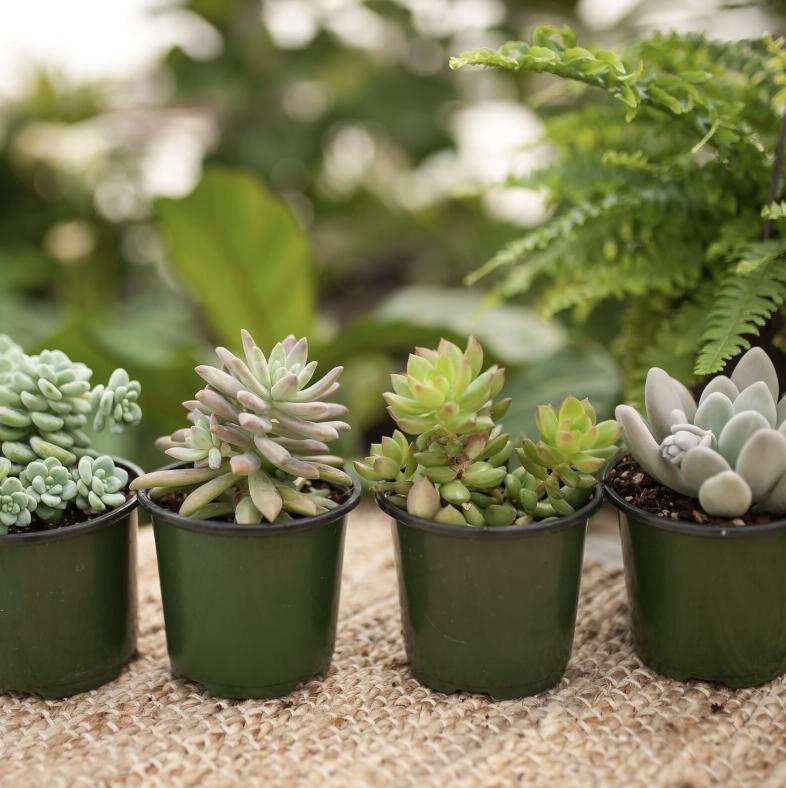
Succulents are well-suited to bright, dry environments and appreciate periods of neglect, making this an ideal house plants whether you have a green thumb or not!
Requires substantial amounts of light, receiving at least four to five hours of bright, direct light every day, and ideally six. Placing your Echeveria outdoors during the summer months will help it to thrive.
Pro tip: If you're moving your plant outside in the spring after growing indoors over the winter, make sure to make a gradual transition. Intense afternoon sunlight can cause sunburn, so place your plant where it receives a bit of shade when the sun is strongest.

Shamrock plants prefer some bright, direct, early light but need protection from harsher afternoon sunlight. Choose an east or west facing window.
When the plant is in active growth, keep the soil barely moist and allow the soil to just dry between waterings. After flowering, if the plant begins to die-back, taper watering and then keep the soil dry during the period of dormancy.


Alocasia cannot handle prolonged, direct, midday sunlight. Important to grow in dappled indirect light. East or North window is best.
Avoid letting your plant go from extremely dry to extremely soaked which can stress a plant out. Although they will tolerate slightly drier soil, you never want to let it go too far. Keep the soil of your plant evenly moist, not soggy.

This massive, brawny fern forms a giant, cascading mound of bright green, glossy fronds that can reach four feet in length. It dwarfs Boston ferns by comparison. Macho fern needs little light to thrive, so this is the perfect fern to use in large urns on a covered porch or patio, or in large hanging baskets under the eaves of a building. Just be sure to give it plenty of moisture and site it out of the way of strong winds and afternoon sun. Since macho fern requires well-drained soil, it is more commonly grown in containers rather than in the landscape. It makes a magnificent monoculture container and if you can’t bear to part with it at the end of the season, you can bring it inside and grow it as a houseplant.
This is a large fern with bright green foliage. It can be grown indoors in bright light indoors or in part shade to shade outdoors.

The Norfolk Pine, or Araucaria heterophylla, is a graceful indoor conifer with soft, needle-like leaves arranged in whorls, resembling a small Christmas tree, making it a popular choice for festive indoor decor.
Light Requirement: Thriving in bright, indirect light, place the Norfolk Pine near a window with filtered sunlight. It can tolerate lower light conditions but benefits from exposure to moderate to bright light for optimal growth.
Watering Requirement: Keep the soil consistently moist, especially during the growing season. Water when the top inch of the soil feels slightly dry. Norfolk Pines prefer well-draining soil and should not be allowed to sit in water.
Mature Height: With a slow growth rate, Norfolk Pines can reach substantial heights indoors, often growing up to 6 to 10 feet (180 to 300 cm). Regular pruning can help manage its size and maintain a more compact form.

Button ferns require medium to bright indirect light. They can also tolerate lower-light conditions as long as natural light is present, such as from a north-facing window. Keep button ferns out of direct sunlight, which can burn the leaves.
Button ferns thrive with moisture, and their soil should never dry out completely. Water when the top of the soil is just beginning to look dry.

The Lipstick Plant, or Aeschynanthus radicans, is a charming and vibrant indoor plant with glossy, green foliage and tubular, lipstick-shaped flowers with a deep maroon/black colour, creating a whimsical and tropical atmosphere.
Light Requirement: Thriving in bright, indirect light, place the Lipstick Plant in a location with filtered sunlight or partial shade. It can tolerate lower light conditions but benefits from exposure to moderate to bright light for robust flowering.
Watering Requirement: Keep the soil consistently moist but not waterlogged. Water when the top inch of the soil feels slightly dry. Ensure proper drainage and avoid overwatering to prevent root rot.
Mature Height: With a trailing growth habit, Lipstick Plants can reach varying lengths, often cascading 1 to 3 feet (30 to 90 cm). Regular pruning encourages branching and helps maintain a fuller appearance.

Light Requirement: Peperomia thrives in bright, indirect light. It can tolerate lower light conditions but may exhibit slower growth.
Watering Requirement: Keep the soil lightly moist, allowing the top inch to dry out between waterings. Overwatering can lead to root rot, so it's essential to avoid waterlogged conditions.

English Ivy (Hedera helix) is a classic and versatile indoor plant, known for its lush, trailing vines and attractive, lobed leaves that come in various shades of green, often with white or yellow variegation.
Light Requirement: English Ivy thrives in bright, indirect light but can tolerate low light conditions. It prefers moderate light levels for optimal growth and variegation.
Watering Requirement: Keep the soil consistently moist but not waterlogged. Water thoroughly when the top inch of soil feels dry. English Ivy prefers a humid environment, so regular misting or the use of a humidity tray is beneficial.
Mature Height: In a hanging basket, English Ivy's trailing vines can grow several feet long, creating a cascading effect. Regular trimming can help maintain its shape and encourage fuller growth.

This plant is the unsung hero of the Sansevieria family - compact, low-maintenance, and quietly gorgeous. With its dark green, strap-like leaves forming a tight rosette, Sansevieria Hahnii should be watered when soil is 90-100% dry.
2.5" pot

Commonly known as : Bolivian Jew, Creeping Basket Plant, Creeping Inch Plant, Inch Plant.
Turtle Vine in an easy growing trailing plant. Keep moist and on a regular watering schedule. Grow in bright but not direct sunlight.

A beautiful air plant gift idea for a friend or yourself!
Comes with glass globe, air plant, moss cork lid and a battery.
Water air plant by soaking in water for 20 min. No need to soak moss.
Created by Horty Girl.

AKA Flame Violet
This plant needs fertile moist but well-draining soils and high humidity. This cultivar can be a challenge to grow, but once you find a good spot that keeps it happy don't move it around. It will also grow in terrarium-type conditions. Just be sure not to overwater as root rot can occur.

From $29.95
Unit price perFrom $29.95
Unit price perPhilodendron 'Green Congo Nuclear' thrives in bright, indirect light. Direct sunlight should be avoided to prevent leaf burn, while too little light can lead to loss of variegation.
Water when the top inch of soil feels dry. Over-watering can lead to root rot, so ensure good drainage. In winter, reduce watering frequency.

Cereus Fairy Castle, a captivating cactus of desert landscapes. With its tall, sculptural stems and natural architectural form, this cactus is perfect for transforming any indoor space into a modern, striking display of arid beauty. Ideal for plant enthusiasts and collectors alike!

Always fun and easy to care for. Simply soak in water for 20 minutes approximately every 10 days.