


House Plants
126 products
126 products
Sort by:
House Plants


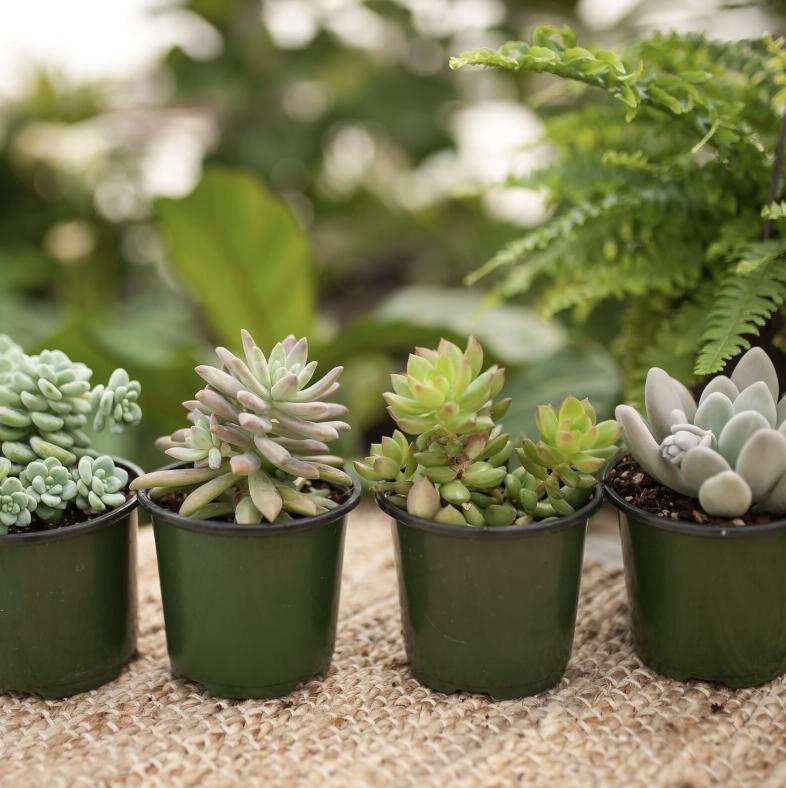
Small succulents ready for planting! Perfect for your indoor living space and outdoor gardens.


A wide assortment of unique cactus.

Despite it looking similar to a palm tree, the Cat Palm is most definitely a plant. With clusters of big, bold, green leaves, this plant can give any house a tropical ambiance. Be warned though, this plant requires a lot of love to grow and thrive.
Height: Up to 8ft
Light: Bright Indirect Light
Soil: Moist(not wet) at all times

The Money Tree, or Pachira aquatica, is a popular indoor plant with a unique braided trunk and palmate leaves, believed to bring good luck and prosperity, making it a charming addition to homes.
Light Requirement: Thriving in bright, indirect light, place the Money Tree in a location with filtered sunlight. It can tolerate lower light conditions but benefits from exposure to moderate to bright light for optimal growth.
Watering Requirement: Allow the top inch of the soil to dry out between waterings, and water thoroughly. The Money Tree prefers slightly moist but well-draining soil. Be cautious not to overwater to prevent root rot.
Mature Height: With a tree-like growth habit, the Money Tree can reach varying heights, commonly growing up to 6 feet (180 cm) indoors. Regular pruning can help manage its size and shape, and it often responds well to being braided for decorative appeal.

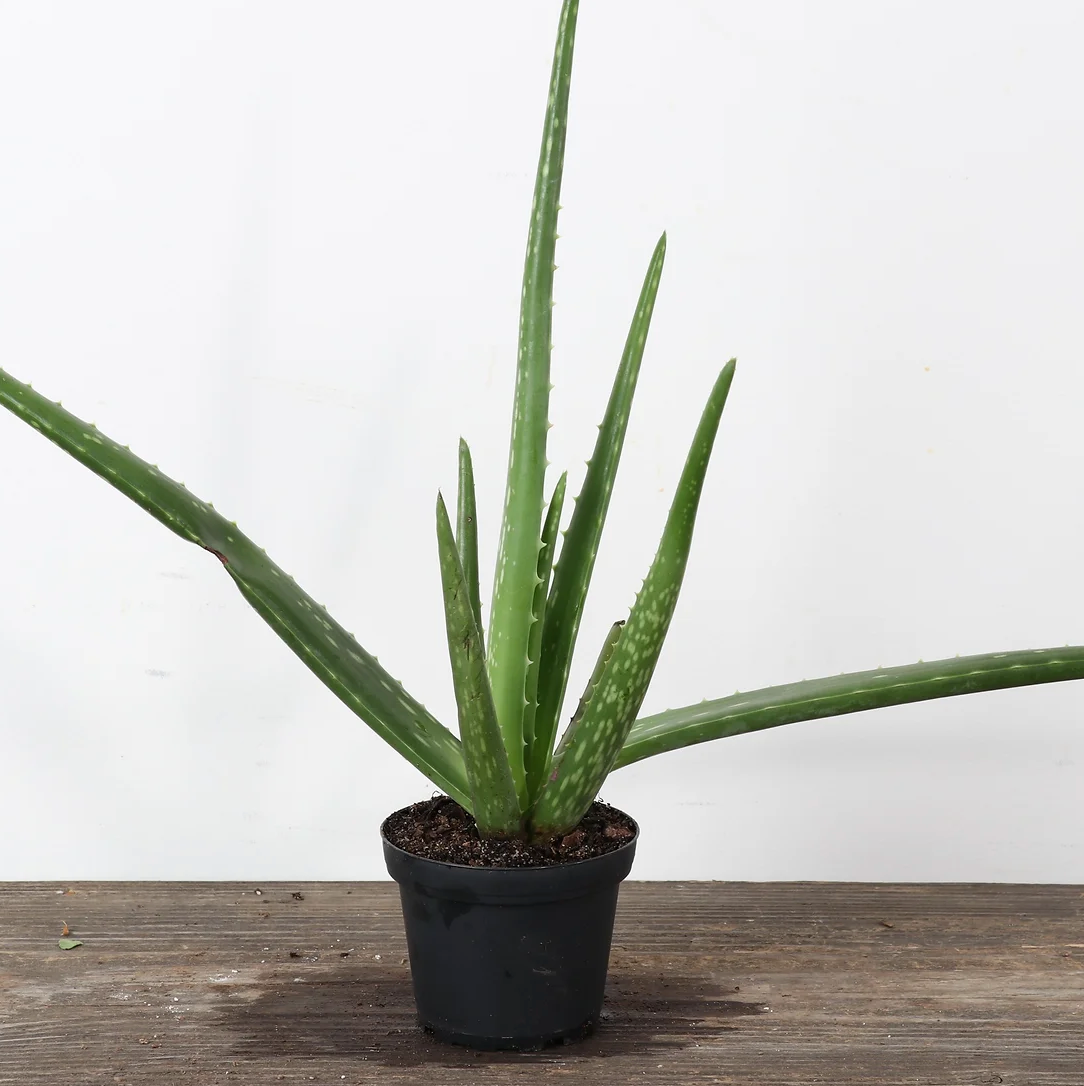
Aloe Vera is a low-maintenance and soothing succulent, well-known for its fleshy, green leaves filled with a cooling gel often used for its healing and moisturizing properties.
Light Requirement: Aloe Vera thrives in bright, indirect to direct sunlight. It does best near a sunny window and can tolerate some direct sun, making it perfect for well-lit indoor spaces.
Watering Requirement: Allow the soil to dry out completely between waterings. Aloe Vera prefers dry conditions and is highly drought-tolerant. Overwatering should be avoided to prevent root rot.
Mature Height: Typically reaching 12 to 24 inches (30 to 60 cm) in height, Aloe Vera forms a rosette of upright leaves and may produce tall flower spikes with yellow or orange blooms under ideal conditions.

Ficus Burgundy, a cultivar of the Ficus elastica, is a striking indoor plant with large, glossy, burgundy-colored leaves, creating a dramatic and sophisticated aesthetic.
Light Requirement: Thriving in bright, indirect light, place the Ficus Burgundy in a location with filtered sunlight or partial shade. It can tolerate lower light conditions but benefits from exposure to moderate to bright light for optimal leaf coloration.
Watering Requirement: Allow the soil to partially dry between waterings, and water thoroughly. Ficus Burgundy prefers slightly moist but well-draining soil. Be cautious not to overwater to prevent root issues.
Mature Height: With a tree-like growth habit, the Ficus Burgundy can reach varying heights, commonly growing up to 6 to 10 feet (180 to 300 cm) indoors. Regular pruning can help maintain a compact and bushy shape.

Goldfish Plant (Nematanthus gregarius) is an attractive and unique indoor plant, known for its glossy, dark green leaves and bright orange, tubular flowers that resemble goldfish, adding a whimsical touch to any space.
Light Requirement: Goldfish Plant thrives in bright, indirect light. It benefits from plenty of light to encourage blooming but should be protected from direct sunlight to prevent leaf scorch.
Watering Requirement: Keep the soil consistently moist but not waterlogged. Water thoroughly when the top inch of soil feels dry. Goldfish Plant enjoys a humid environment, so regular misting or the use of a humidity tray is beneficial.
Mature Height: Goldfish Plant has a trailing or arching growth habit, making it perfect for hanging baskets or elevated planters where its cascading foliage and flowers can be displayed.

You'll fall in love with the Heart Leaf Hoya, its big, green, heart-shaped leaves are sure to win you over! This houseplant will bring all the charm you need, without any of the heartache.
Hoya is a succulent plant, which stores water in the fleshy leaf. Avoid watering too often, as plants perform best when the soil is allowed to dry between waterings. As such, hoya hearts only need to be watered once every two weeks or so. Water until the soil is saturated and allow any excess water to drain out of the container.
Place plants in a location that receives several hours of bright light each day, either direct sun or bright indirect light.


Aglaonema, also known as Chinese Evergreen, is an attractive and versatile indoor plant with glossy, lance-shaped leaves showcasing various shades of green, silver, and red.
Light Requirement: Adaptable to low light conditions, Aglaonema thrives in indirect, moderate to low light, making it an excellent choice for spaces with limited sunlight.
Watering Requirement: Allow the soil to partially dry between waterings, and water thoroughly when needed. Avoid overwatering, as Aglaonema prefers slightly moist but not waterlogged soil.
Mature Height: Typically reaching 1 to 3 feet (30 to 90 cm), Aglaonema maintains a compact and bushy growth habit. Regular pruning can help control its size and promote a fuller appearance.

African violets are a herbaceous flowering plant more commonly kept as a houseplant in Northern Climates.
It's fleshy leaves have a fine, hair-like fur on them. Blooms produce five petals and are velvety to the touch. Vibrant colours are
Available in purple, pink, and white.
CAUTION: Do Not over water, highly susceptible to root rot. Prefers a pot with good drainage/ soil.

Ficus Lyrata
Native to tropical western Africa, Ficus lyrata, commonly known as the fiddle-leaf fig, has very large green leaves with a leather-like texture. Although Ficus lyrata grows naturally in lowland tropical forests it can thrive in a large range of environments. Place in bright indirect sunlight, on the ground where it can grow up to 6' tall. Keep soil moist.
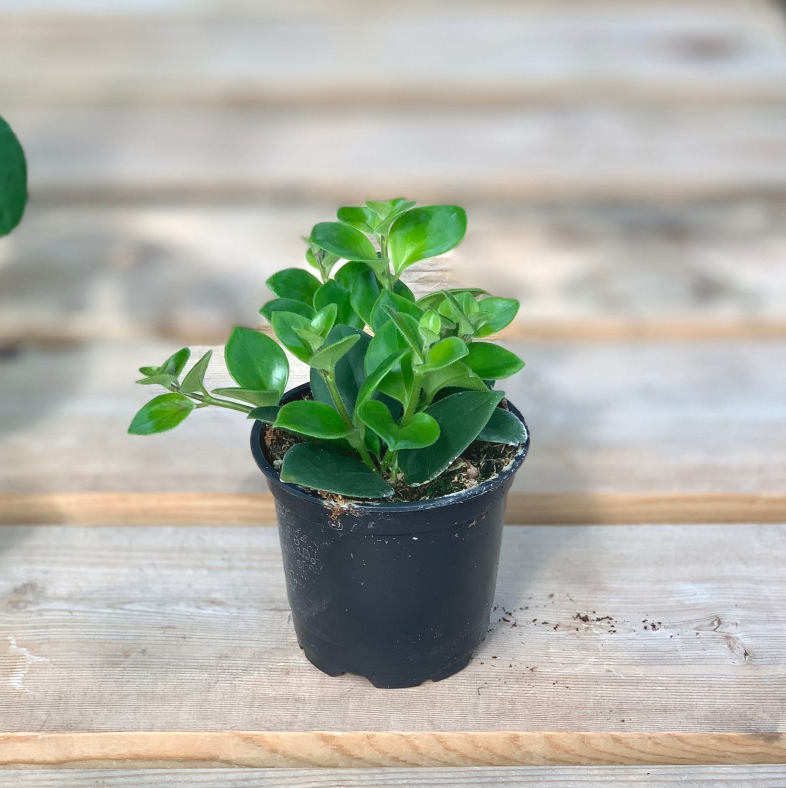
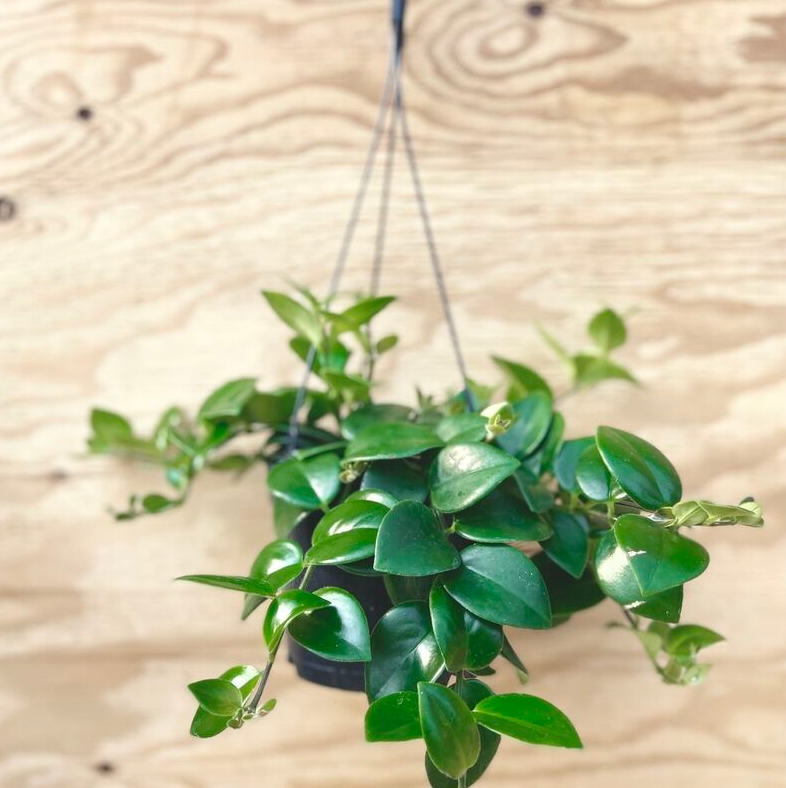
The Lipstick Plant, or Aeschynanthus radicans, is a charming and vibrant indoor plant with glossy, green foliage and tubular, lipstick-shaped flowers that add a burst of color, creating a whimsical and tropical atmosphere.
Light Requirement: Thriving in bright, indirect light, place the Lipstick Plant in a location with filtered sunlight or partial shade. It can tolerate lower light conditions but benefits from exposure to moderate to bright light for robust flowering.
Watering Requirement: Keep the soil consistently moist but not waterlogged. Water when the top inch of the soil feels slightly dry. Ensure proper drainage and avoid overwatering to prevent root rot.
Mature Height: With a trailing growth habit, Lipstick Plants can reach varying lengths, often cascading 1 to 3 feet (30 to 90 cm). Regular pruning encourages branching and helps maintain a fuller appearance.
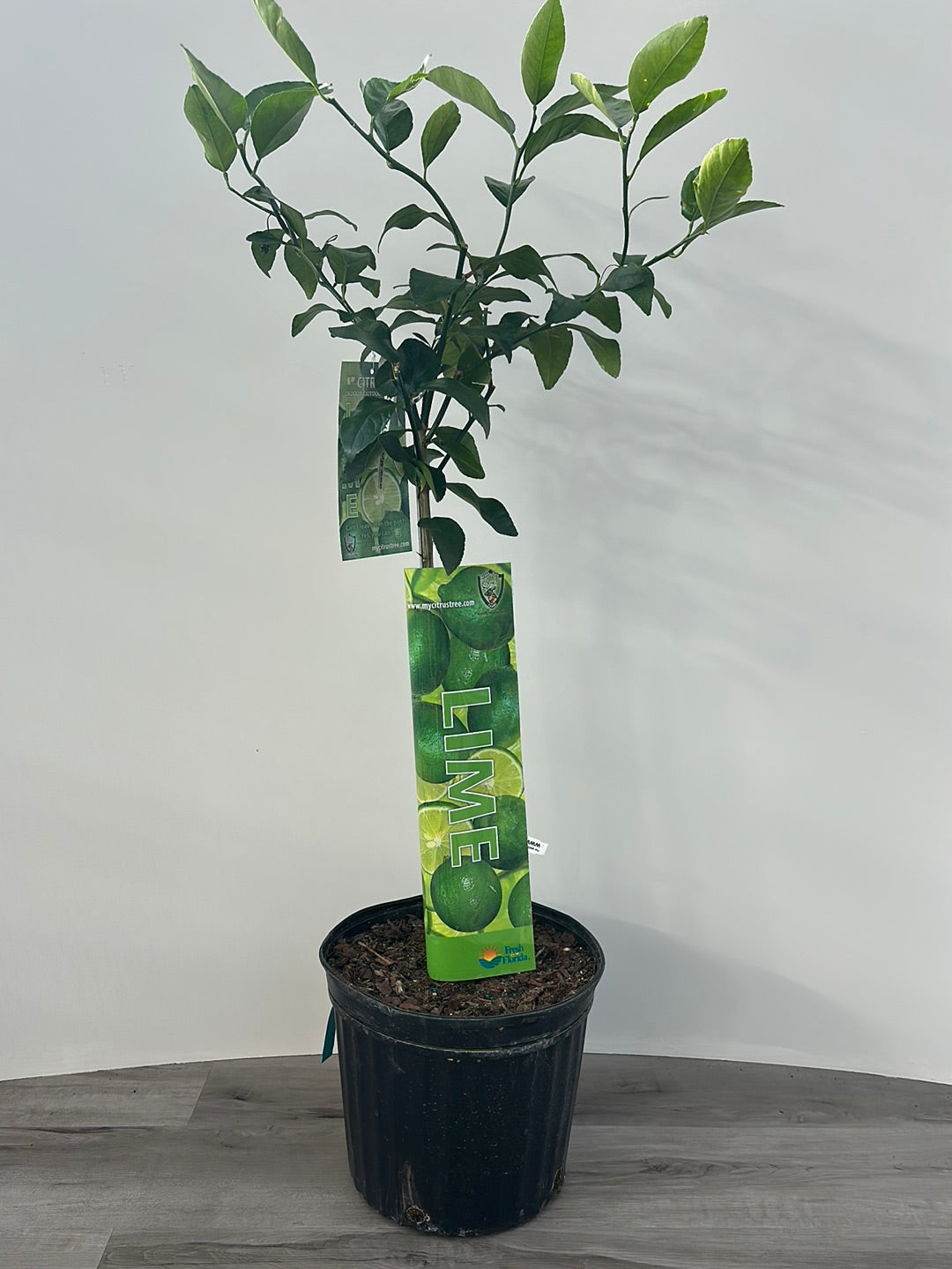
Indoor Citrus Plants, such as the popular Meyer Lemon or Key Lime, are aromatic and with glossy green leaves and fragrant white flowers that may develop into small, edible citrus fruits.
Light Requirement: Thriving in bright, direct sunlight, place indoor citrus plants in a location with ample natural light. They benefit from at least 8 hours of sunlight per day, making them suitable for sunny windowsills.
Watering Requirement: Keep the soil consistently moist but well-draining. Water when the top inch of the soil feels slightly dry. Ensure proper drainage to prevent waterlogged conditions, as citrus plants are sensitive to overwatering.
Mature Height: With a compact growth habit, indoor citrus plants can reach varying heights, commonly staying between 2 to 4 feet (60 to 120 cm). Pruning helps shape the plant and encourages healthy fruit production.
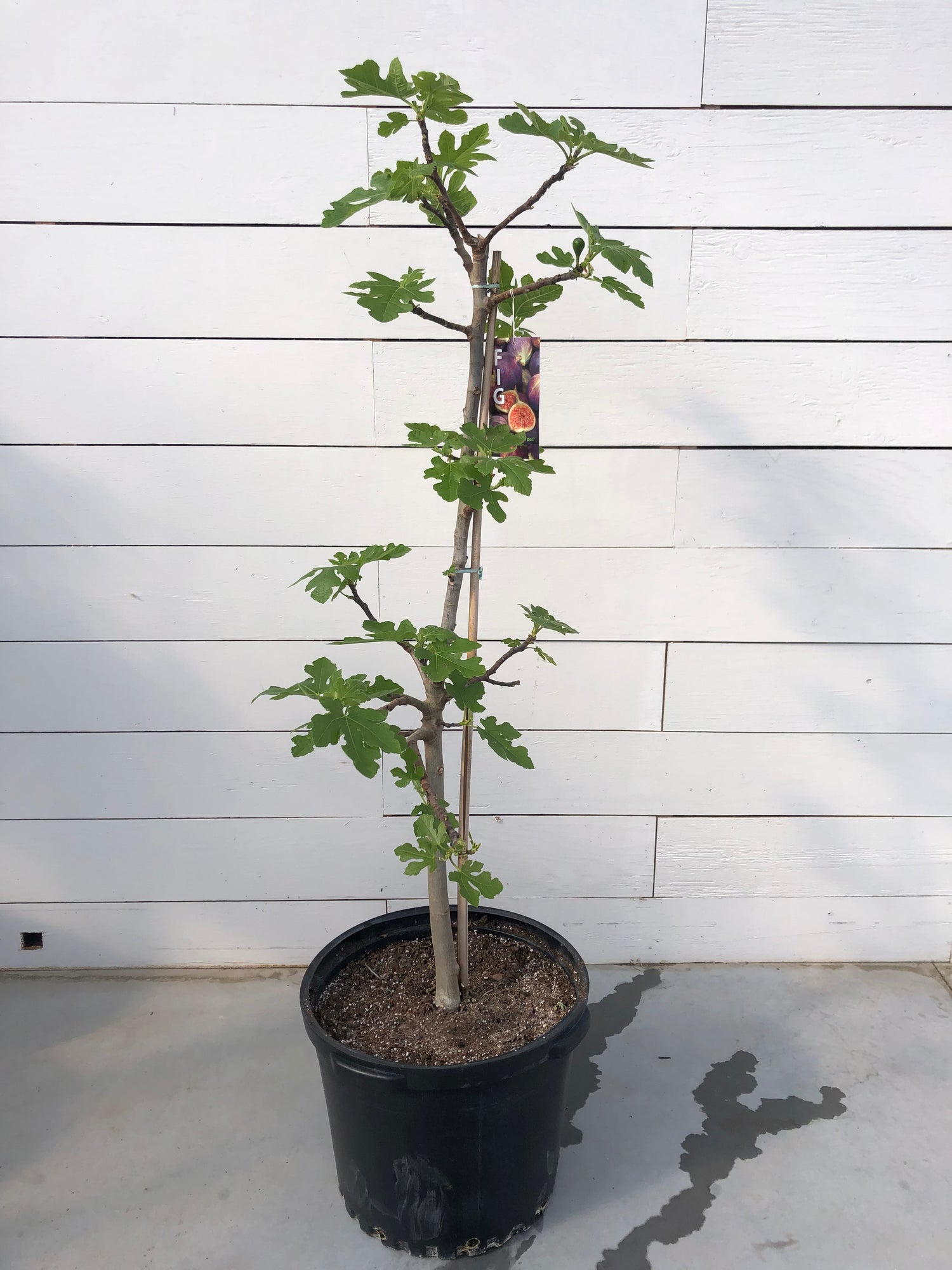
**Online orders will be charged delivery fee for 10,15 & 25gal. trees.**
Fig trees like to receive a min of 6 hours of indirect/direct light every day. Placing the tree in a south facing window or conservatory is ideal. The more light your fig tree receives the more fruit it will produce.
15 Gal. Pot 5-7' tall from ground.
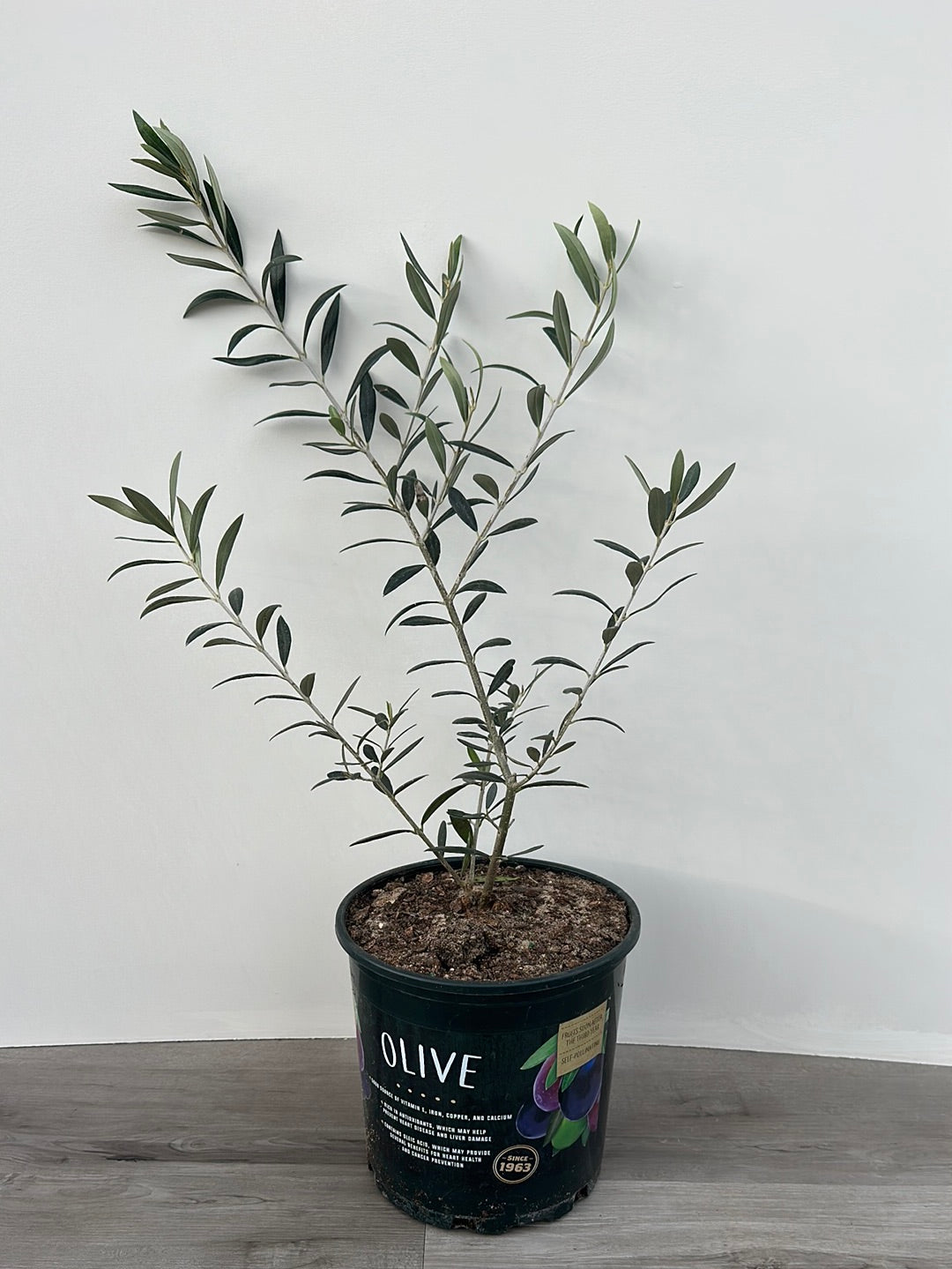
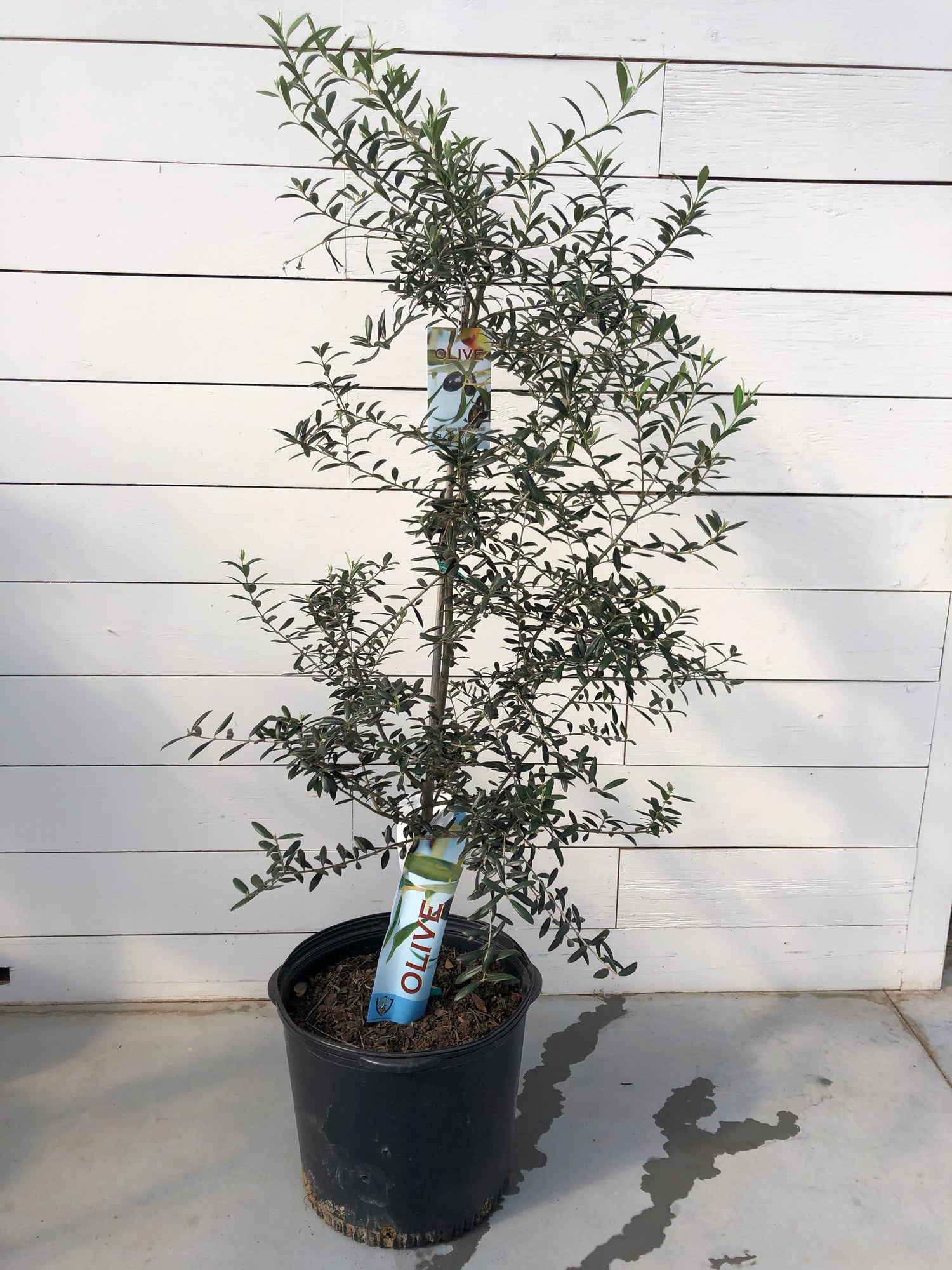
**Online orders will be charged delivery for 10,15 & 25gal. trees.**
Olive trees grow well in full, bright and consistent sunlight. Your plant will be happiest in a large, south-facing window.
Choose a spot in your home where it will get at least 6 hours of direct sunlight, ideally more. While south-facing windows are the best, east- or west-facing windows that are completely unobstructed will be adequate. Avoid letting the leaves press up against the glass of a window as this might cause the foliage to burn.
Pick a spot for your olive tree and keep it there — it will give the plant the best chance to adapt to the lighting conditions. If you have a bright and sunny outdoor space, bring it out for the summer to encourage more growth.
15 Gal. Pot 7'-8' tall from the ground.
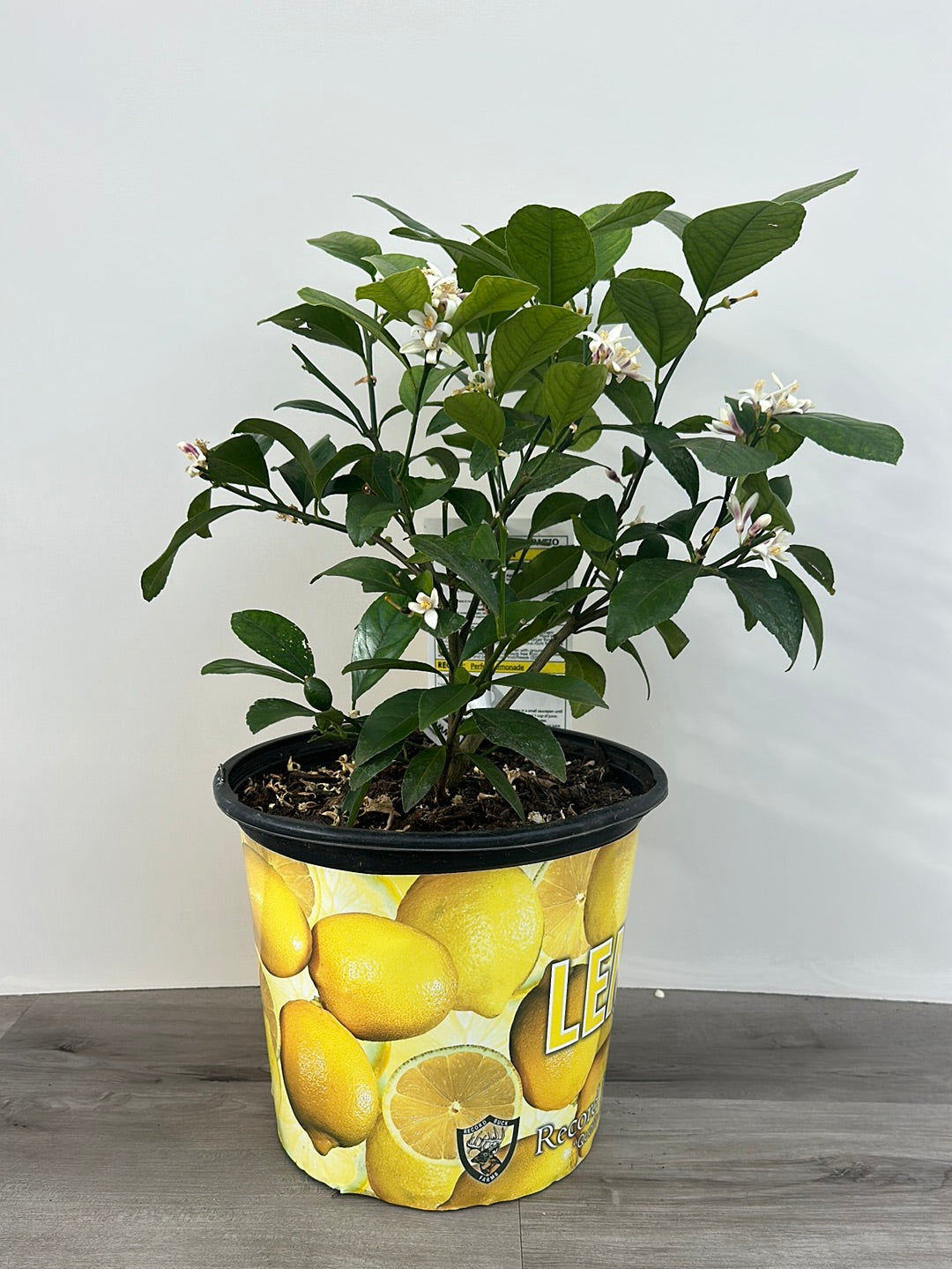
Indoor Citrus Plants, such as the popular Meyer Lemon or Key Lime, are aromatic and featuring glossy green leaves and fragrant white flowers that may develop into small, edible citrus fruits.
Light Requirement: Thriving in bright, direct sunlight, place indoor citrus plants in a location with ample natural light. They benefit from at least 8 hours of sunlight per day, making them suitable for sunny windowsills.
Watering Requirement: Keep the soil consistently moist but well-draining. Water when the top inch of the soil feels slightly dry. Ensure proper drainage to prevent waterlogged conditions, as citrus plants are sensitive to overwatering.
Mature Height: With a compact growth habit, indoor citrus plants can reach varying heights, commonly staying between 2 to 4 feet (60 to 120 cm). Pruning helps shape the plant and encourages healthy fruit production.

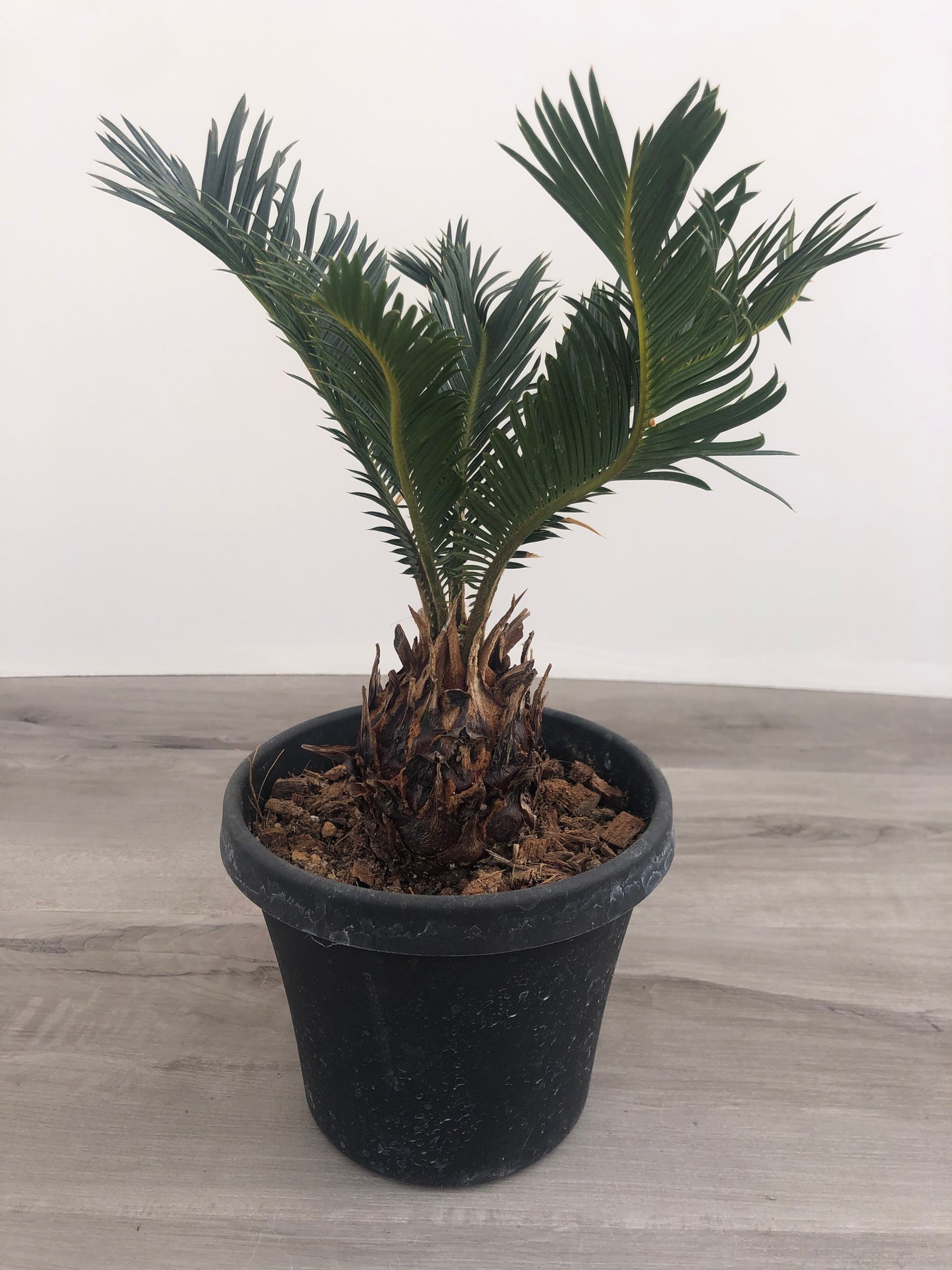
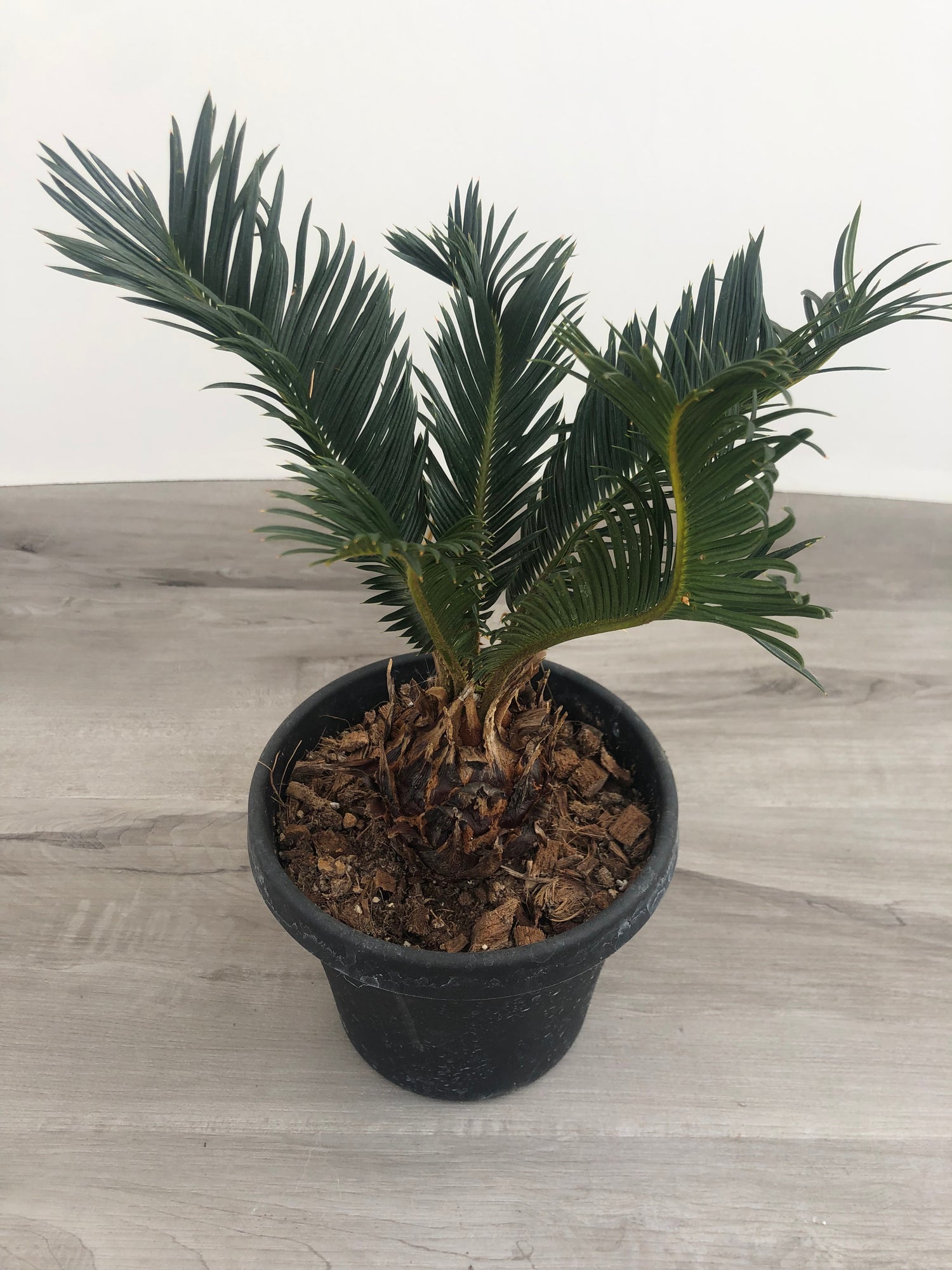
Sago Palm, or Cycas revoluta, is a unique and ancient plant resembling a palm tree, with a distinctive crown of feathery, dark green fronds and a sturdy, textured trunk.
Light Requirement: Preferring bright, indirect light, place the Sago Palm in a location with filtered sunlight. It can tolerate lower light conditions, but it thrives best with ample light.
Watering Requirement: Allow the soil to dry out between waterings, and water sparingly. Sago Palms are drought-tolerant and can suffer from overwatering, so ensure the soil is well-draining.
Mature Height: Reaching a mature height of 3 to 8 feet (90 to 240 cm), the Sago Palm is a slow grower. Regularly remove yellowing or damaged fronds to maintain a tidy appearance.

The Pink Ginny Peperomia, a charming variation of the Peperomia family, boasts small, heart-shaped leaves with a delightful blend of green and shades of pink, creating a visually appealing and dainty indoor plant.
Light Requirement: Thriving in bright, indirect light, place the Pink Ginny Peperomia in a location with filtered sunlight or partial shade. It can tolerate lower light conditions but benefits from exposure to moderate to bright light for optimal growth and vibrant coloration.
Watering Requirement: Allow the soil to partially dry between waterings, and water thoroughly. The Pink Ginny Peperomia prefers slightly moist but well-draining soil. Be cautious not to overwater to prevent root issues.
Mature Height: Maintaining a compact size, the Pink Ginny Peperomia typically reaches a height of around 6 to 8 inches (15 to 20 cm). Regular pruning can help shape the plant and maintain its attractive form.
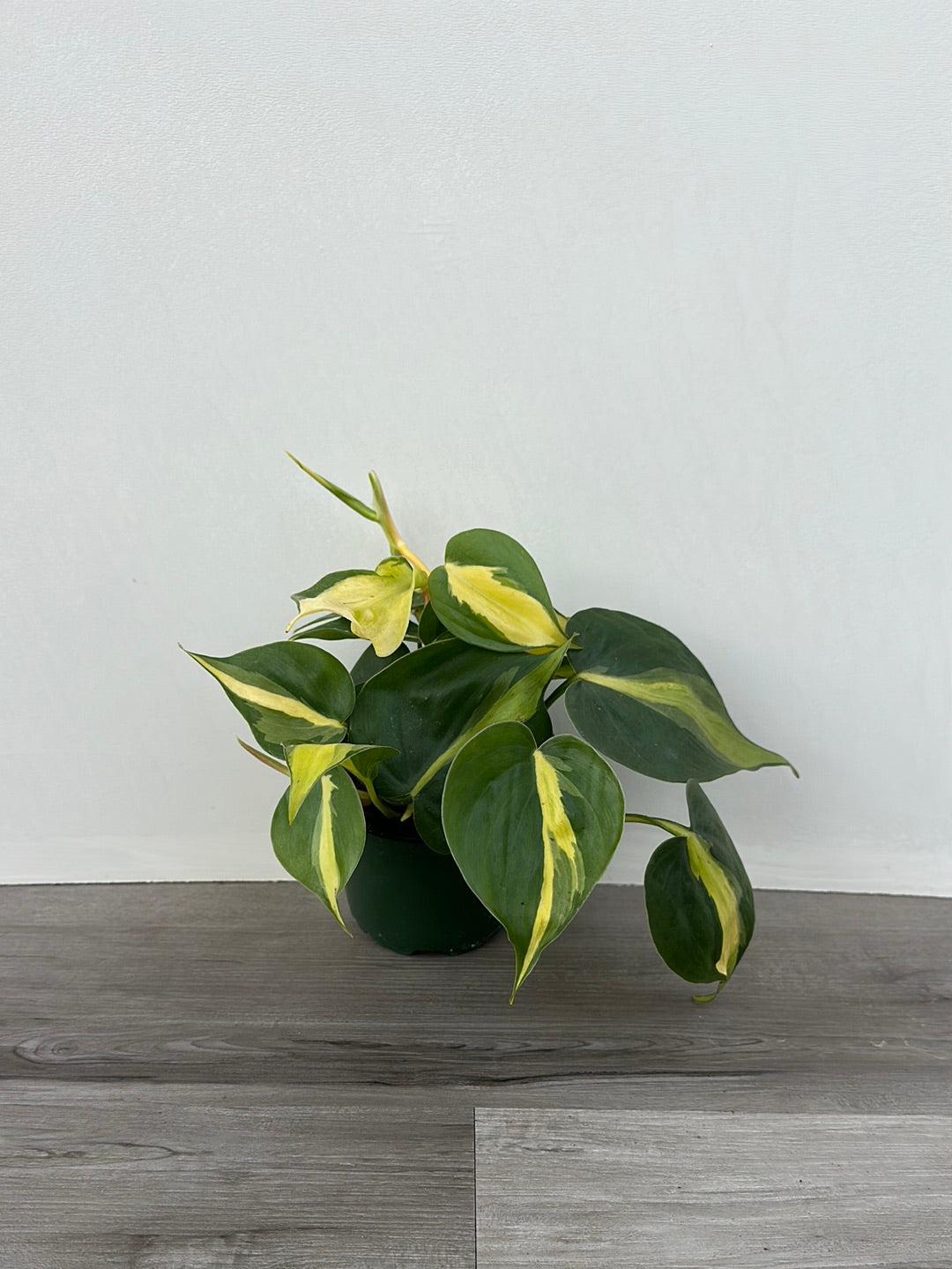
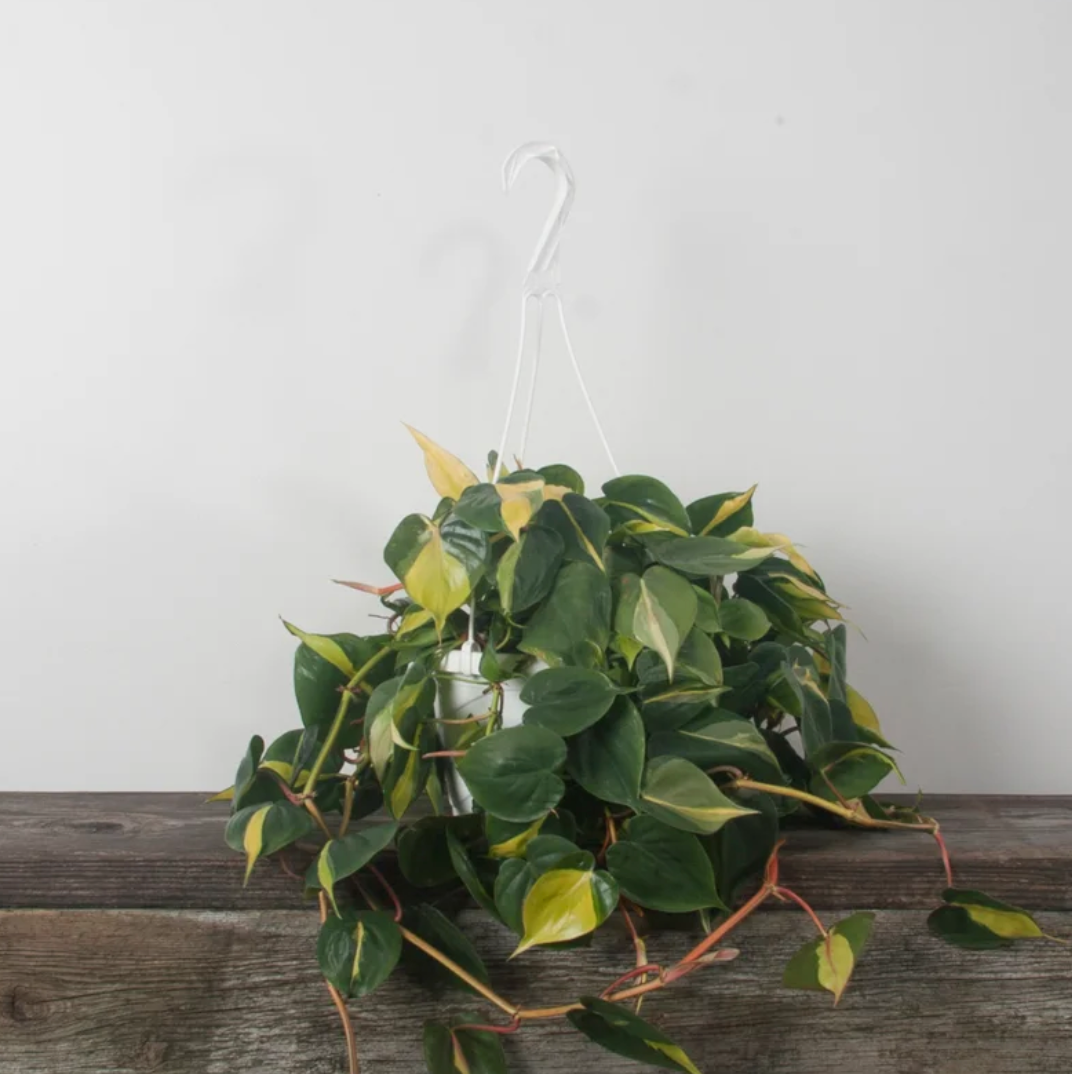
The Philodendron Brasil is a vibrant and popular cultivar with heart-shaped leaves showcasing a striking mix of green and yellow hues, creating a visually appealing and dynamic indoor plant.
Light Requirement: Thriving in bright, indirect light, place the Philodendron Brasil in a location with filtered sunlight or partial shade. It can tolerate lower light conditions but benefits from exposure to moderate to bright light for optimal growth and coloration.
Watering Requirement: Allow the soil to partially dry between waterings, and water thoroughly. The Philodendron Brasil prefers slightly moist but well-draining soil. Be cautious not to overwater to prevent root issues.
Mature Height: With a climbing or trailing habit, the Philodendron Brasil can reach varying lengths, making it suitable for hanging baskets or climbing supports. Regular pruning helps control its size and promotes a bushy appearance.

The Lace Leaf Anthurium, an exquisite variety of Anthurium, features uniquely shaped, lace-like leaves that are both delicate and distinctive, adding an elegant touch to indoor spaces.
Light Requirement: Thriving in bright, indirect light, place the Lace Leaf Anthurium in a location with filtered sunlight or partial shade. It can tolerate lower light conditions but benefits from exposure to moderate to bright light for optimal growth and flowering.
Watering Requirement: Allow the soil to partially dry between waterings, and water thoroughly. The Lace Leaf Anthurium prefers slightly moist but well-draining soil. Avoid overwatering to prevent root issues.
Mature Height: With an upright growth habit, the Lace Leaf Anthurium typically reaches a height of around 1 to 2 feet (30 to 60 cm). Regular pruning helps maintain a neat appearance and encourages new growth.

Pink Princess Philodendron is a striking hybrid featuring dark green and pink variegated leaves, adding a touch of elegance to indoor spaces.
Light Requirement: Preferring bright, indirect light, place the plant in filtered sunlight or partial shade, avoiding prolonged exposure to direct sunlight.
Watering Requirement: Keep the soil consistently moist, watering when the top inch feels slightly dry, while avoiding both excessive dryness and waterlogged conditions.
Mature Height: With a climbing habit, Pink Princess Philodendron can reach varying heights; regular pruning helps maintain a more compact and aesthetically pleasing shape.
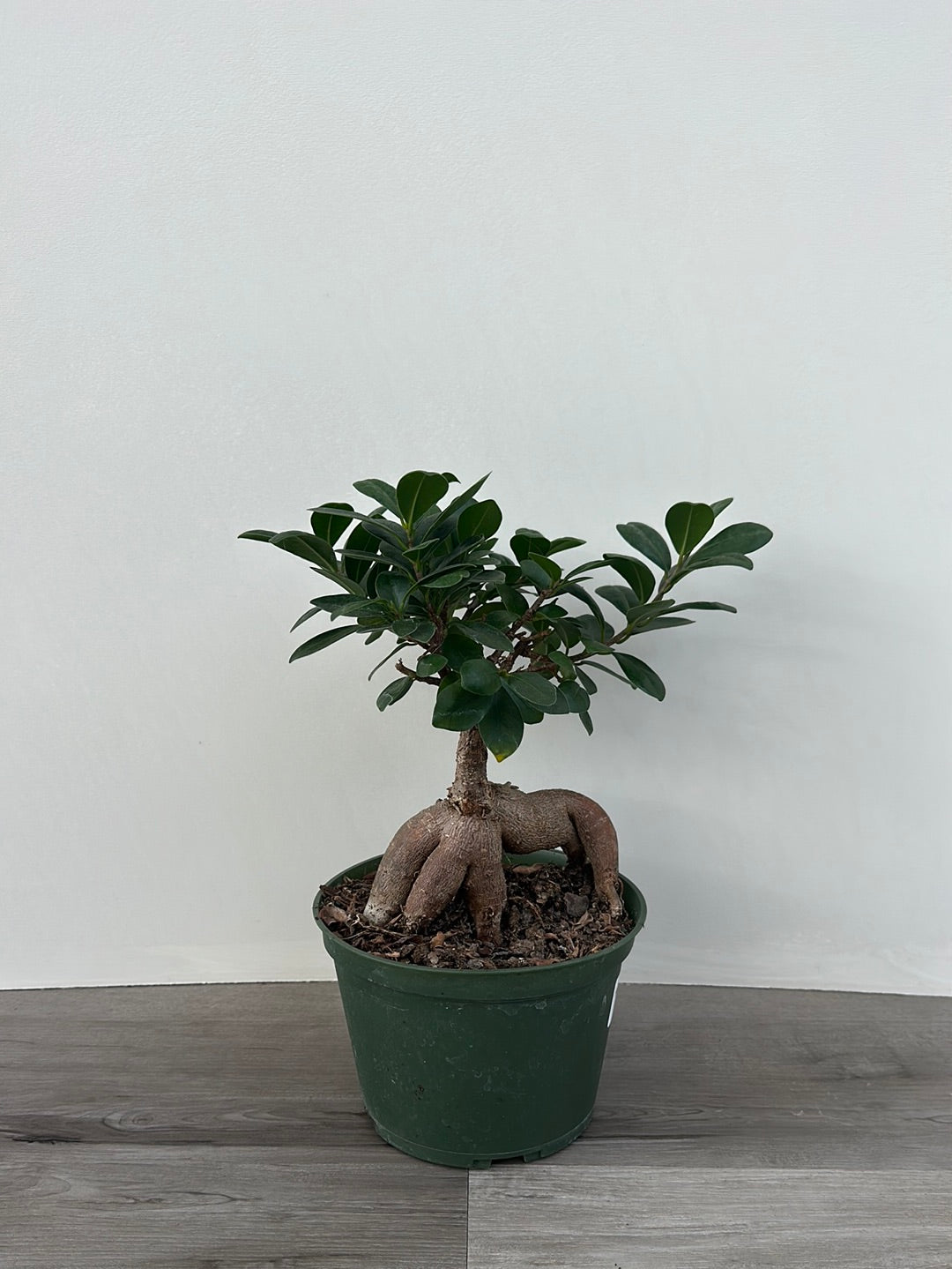
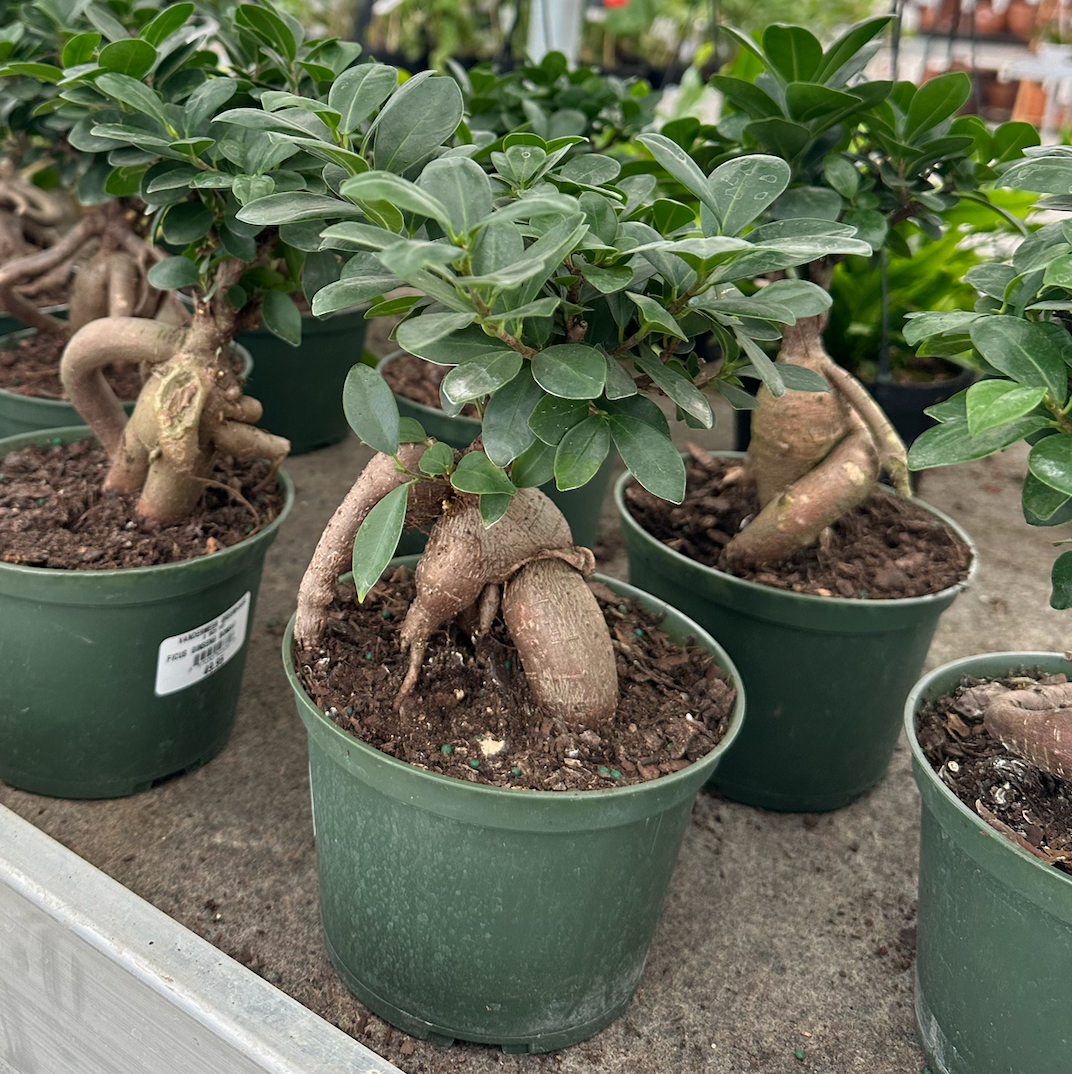
The Ficus Ginseng Bonsai is a distinctive bonsai variety featuring a thick, twisted trunk with shiny, oval-shaped, and vibrant green leaves, creating an artistic and captivating appearance.
Light Requirement: Preferring bright, indirect light, place the Ficus Ginseng Bonsai in a location with filtered sunlight. It can tolerate lower light conditions but benefits from exposure to moderate to bright light for optimal growth.
Watering Requirement: Allow the soil to partially dry between waterings, and water thoroughly. Ficus Ginseng Bonsai prefers slightly moist but well-draining soil. Avoid overwatering to prevent root rot.
Mature Height: Maintaining a compact size, the Ficus Ginseng Bonsai is ideally suited for bonsai cultivation and can reach a height of 8 to 12 inches (20 to 30 cm) with regular pruning to maintain its intricate form.


6" hanging basket